



Two Scrum Masters can hold the same certification, run the same ceremonies, and use the same vocabulary and still get completely different reactions from their teams. Why teams listen to some Scrum Masters and ignore others has almost nothing to do with the framework itself. It comes down to influence, and influence is built, not certified. This article breaks down exactly what creates that gap, and how Scrum Master training helps close it.
Why the Scrum Master Role Has No Built-In Authority
A Scrum Master has no formal power over the team no ability to assign tasks, set salaries, or issue instructions the way a traditional manager can. Every bit of influence a Scrum Master has is earned through credibility, consistency and trust. That’s exactly why two people in the same role, with the same certification, can get completely different levels of engagement from the same kind of team.
Why Teams Listen to Some Scrum Masters and Ignore Others
In almost every case we see, it comes down to a handful of consistent patterns not personality, and not how well someone knows the Scrum Guide.
1. Acting Like a Process Cop, Not a Facilitator
Scrum Masters who enforce ceremonies rigidly cutting people off at exactly fifteen minutes, quoting the Scrum Guide instead of solving the actual problem quickly get tuned out. Teams stop listening to someone who seems more interested in the process than in helping them succeed.
2. No Real Understanding of the Team’s Work
A Scrum Master who can’t follow a basic technical conversation, or doesn’t understand what the team is actually building, loses credibility fast. Teams naturally discount input from someone who doesn’t seem to understand their world, even if the process advice itself is sound.
3. Talking More Than Listening
Scrum Masters who dominate ceremonies with their own opinions, rather than drawing out the team’s thinking, train their teams to disengage. The most influential Scrum Masters ask sharp questions and create space, rather than filling it.
4. No Follow-Through on Blockers
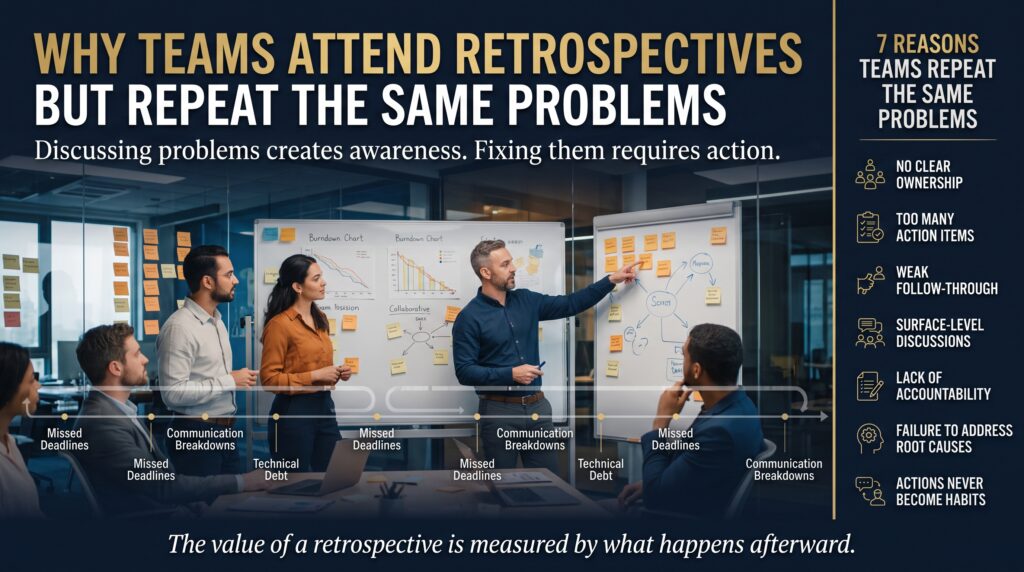
If a Scrum Master raises a blocker in one meeting and it’s still unresolved three sprints later with no visible effort, the team learns that raising issues doesn’t actually change anything. That quietly kills engagement in every future retrospective.
5. Inconsistent Behaviour Under Pressure
A Scrum Master who’s calm and collaborative in easy sprints but defensive or absent during a crisis loses trust exactly when it matters most. Consistency under pressure is one of the fastest ways to build or destroy team confidence.
What Makes Teams Actually Listen
- Genuine curiosity about the team’s work, not just the process around it
- Asking questions that make the team think, rather than dictating answers
- Visibly following through on blockers, even slow or difficult ones
- Staying consistent and calm, especially when a sprint goes badly
- Earning trust in one-on-one conversations, not just in ceremonies
How Training Builds Real Influence, Not Just Process Knowledge

Certification alone teaches the framework. Building genuine influence takes deliberate practice in facilitation, coaching and stakeholder communication which is exactly what separates our Agile Scrum Foundation (BCS/EXIN) and Agile Scrum Practitioner (BCS/EXIN) courses from a purely theoretical certification path. For Scrum Masters ready to build advanced facilitation and coaching capability specifically, the iSQI Scrum Master Pro Certification is designed to develop exactly the influence skills this article covers.
Practical Ways to Close Your Own Influence Gap
- Spend time understanding what the team is actually building, not just how they’re tracking it
- Ask one more question than you think you need to in every ceremony
- Pick one unresolved blocker and visibly push it forward this week
- Ask a trusted teammate for honest feedback on how you show up under pressure
What the Wider Agile Community Says About This
According to Scrum.org, the Scrum Master role is fundamentally about servant leadership and coaching, not command and control which is exactly why influence, not authority, determines how effective someone is in the role. Atlassian’s guide to the Scrum Master role similarly frames facilitation and continuous improvement as core to the role, reinforcing that the soft skills behind genuine team trust are not optional extras they’re the job.
Where This Shows Up Across Australian Teams
We see this influence gap consistently with Scrum Masters training with us across Melbourne, Sydney, Brisbane, Perth, Adelaide and Canberra the same certification, wildly different levels of team engagement, almost always explained by the influence habits covered above.
Common Mistakes That Widen the Influence Gap
- Relying on the Scrum Guide as an authority instead of earning trust directly
- Treating ceremonies as the only place influence is built
- Avoiding difficult conversations with the team or stakeholders
- Raising blockers without following through on resolving them
- Assuming certification alone will earn the team’s respect
Final Thoughts
If you’ve been wondering why teams listen to some Scrum Masters and ignore others, the honest answer is that influence is earned through consistency, curiosity and follow-through not granted by a certificate. Build those habits deliberately, and back them with training through our Scrum Master courses. Contact us to find the right course for where you are in your Scrum Master journey.