
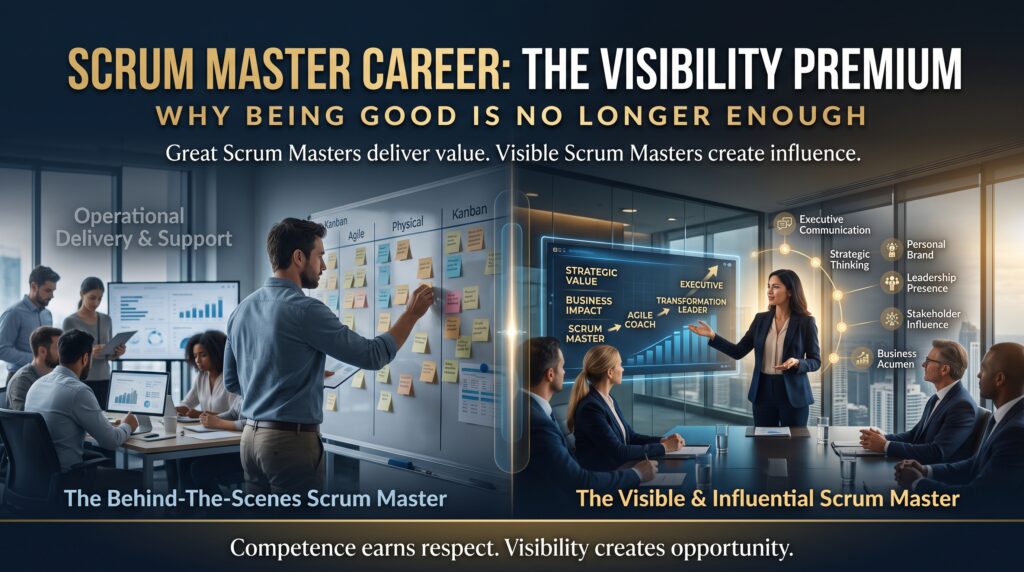
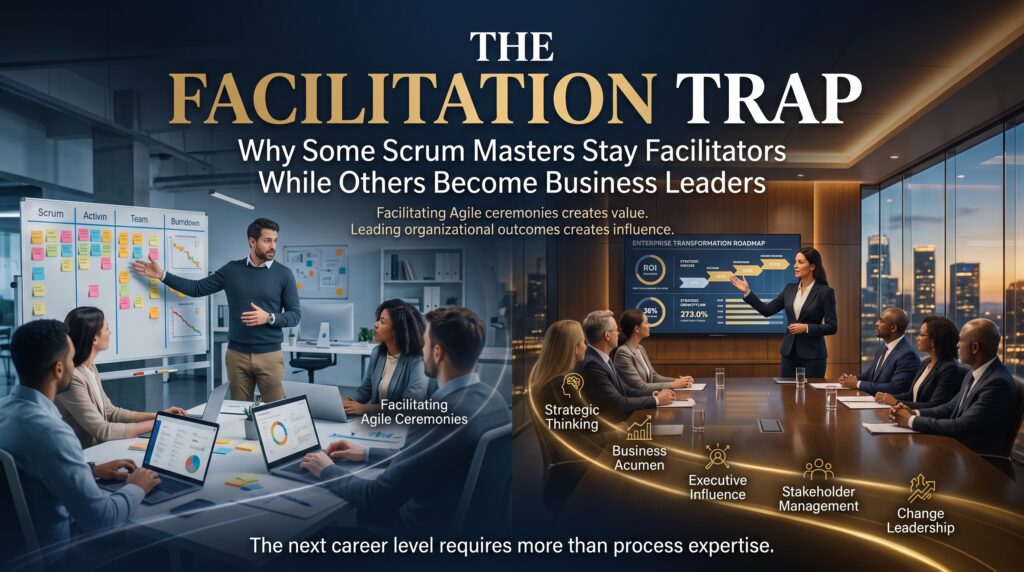

Scrum Master influence is what separates the person who keeps Sprint events running on time from the person a delivery director phones before locking the next quarter’s roadmap. Both people hold the same job title. Both may hold the same certification. Yet one is treated as a facilitator, and the other sits in the room where trade-offs are actually made. We call this the agile influence gap, and it is easy to spot once you know what to look for.
Have you ever run a flawless Sprint Review, only to watch a senior stakeholder reshuffle priorities in a corridor conversation two days later? That moment is the gap in action. The team did everything right inside the framework, but nobody with authority was ready to listen. This article explains where the gap comes from, what influential Scrum Masters do differently, and how you can start closing it, whether you work in Sydney, Melbourne, Brisbane, Perth, Adelaide or Canberra.
What Is the Agile Influence Gap?
The agile influence gap is the distance between how well a Scrum Master runs the framework and how much weight their voice carries when the business makes decisions. It has nothing to do with intelligence or effort, and Scrum Master influence is not about job titles. Plenty of hard-working Scrum Masters facilitate excellent events and still find that funding, scope and team-structure decisions are made without them.
The Scrum Guide is clear that the role reaches beyond the team. It describes the Scrum Master as accountable for the team’s effectiveness, and also as someone who serves the wider organisation by coaching it in Scrum adoption, helping stakeholders understand evidence-based ways of working, and removing barriers between stakeholders and the team. In practice, many people only ever perform the first half of that description. Ceremonies are visible, scheduled and easy to measure. Organisational influence is slower, quieter and much harder to put on a timesheet.
Ceremony Runners vs Decision Shapers
The easiest way to see the gap is to compare how two Scrum Masters handle the same situations.
| Situation | Ceremony-focused Scrum Master | Influential Scrum Master |
| Main focus | Keeping Scrum events on schedule and tidy | Improving how the whole system delivers value |
| Sprint Review | Demonstrates finished work | Links finished work to customer feedback and the next business choice |
| Talking to executives | Reports velocity and attendance | Shares flow, quality and outcome evidence with clear options |
| Impediments | Logs them and waits | Escalates with a proposed fix and the cost of delay |
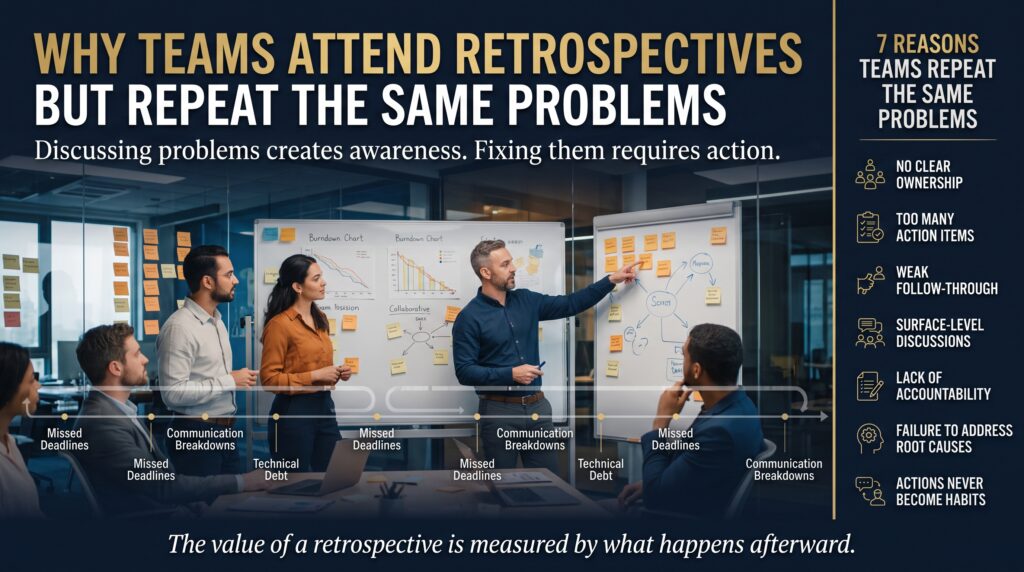
| Retrospectives | Team-level tweaks only | Feeds recurring organisational blockers to leadership |
| How others see them | Process administrator | Trusted adviser on delivery risk |
Notice that none of the behaviours behind strong Scrum Master influence require a bigger title. They require a different way of framing the same work.
Why Some Scrum Masters Get Stuck on the Wrong Side of the Gap
The Agile Manifesto values customer collaboration over contract negotiation, which is itself an argument for spending time with the people who fund and use the work. So why does Scrum Master influence stall for so many people who stay inside the team boundary? Three reasons come up again and again.
Training Often Stops at the Team Boundary
Most introductory courses concentrate on roles, events and artefacts, and that is a sensible place to start. They teach you how to run a good Sprint Planning session. They rarely teach you how to explain to a chief financial officer why a stable team costs less than a shifting project group. Without that second lesson, new Scrum Masters assume the job ends where the team’s board ends, and their influence never leaves the team room.
The Role Is Often Measured on Activity
When an organisation judges a Scrum Master by whether events happened and the Jira board looks neat, that is exactly the behaviour it gets. Velocity charts and attendance lists are activity measures. They say nothing about whether customers are better off.
Business Language Is Rarely Taught
Leaders talk about risk, revenue, cost, compliance and customer retention. Scrum Masters often talk about story points, refinement and the definition of done. Neither vocabulary is wrong, but only one gets a seat at the budget table. Influential Scrum Masters learn to translate between the two.
How Scrum Master Influence Actually Works
Influence without formal authority is a skill you build, not a trait you are born with. The Scrum Masters who shape decisions tend to share six habits.
- Speak in outcomes, not events. Instead of saying the team missed two Sprint Goals, explain that the customer onboarding improvement is three weeks behind and what that delay means for the quarter.
- Bring evidence, not opinions. Cycle time, work in progress, escaped defects and customer feedback tell a story a stakeholder can check for themselves. One honest page of data beats an hour of persuasion.
- Map your stakeholders. List who decides, who influences the decider and who is affected. Then plan how often, and in what format, each person needs to hear from you.
- Partner with the Product Owner. The Product Owner owns the value conversation. A Scrum Master who supports that person with evidence and coaching becomes part of the decision loop rather than a competitor for attention.
- Escalate with options. Complaining about a slow approvals process earns sympathy. Presenting three ways to shorten it, with the trade-off for each, earns action.
- Collect small, visible wins. Trust is built one modest result at a time. Removing a recurring two-day wait for a test environment earns more credibility than any slide deck.
Consider a hypothetical example. A Scrum Master at a Melbourne insurer notices that every release waits nine days for a manual security review. Instead of mentioning it in a retrospective and moving on, she measures the wait across six months of releases, estimates the delay to customer-facing features and takes three options to the head of engineering: automate part of the review, schedule reviews weekly, or embed a security partner in the team. The conversation shifts from “Agile is slow” to “which fix do we fund?” That is Scrum Master influence in practice.
Scrum Master Influence Across Australian Cities
The shape of the gap changes with local industry, although the underlying skills stay the same. Scrum Master influence looks slightly different in each city. These are general patterns rather than rules.
- Sydney: Large banks, insurers and consultancies mean many layers between the team and the decision-maker. Influence often depends on navigating programme-level governance.
- Melbourne: Financial services, health and retail technology are strong here. Scrum Masters often work across several teams and need to show how flow connects to customer experience.
- Brisbane: A growing technology sector sits alongside government and resources work. Practical coaching that delivers quick, visible results tends to be valued.
- Perth: Resources, energy and engineering-led organisations tend to respect evidence and safety thinking, which suits data-backed conversations.
- Adelaide: Defence, health and digital government projects bring assurance requirements. Influence grows when you can explain how iterative delivery still meets them.
- Canberra: Federal agencies and their suppliers have many stakeholders and structured procurement. Scrum Masters who can bridge policy, delivery and audit conversations stand out.
A 90-Day Plan to Close Your Influence Gap
You do not need permission or a new role to begin. A simple three-phase plan is enough to build Scrum Master influence and change how you are seen.
| Phase | Focus | What to do |
| Days 1 to 30 | Listen | Book short conversations with three stakeholders. Ask which decisions worry them most and learn how prioritisation and funding really work. |
| Days 31 to 60 | Measure | Track cycle time, work in progress and one customer outcome measure. Share a one-page summary after each Sprint Review. |
| Days 61 to 90 | Advise | Take one organisational blocker to a leader with data and three options. Agree an owner and a review date. |
Then repeat the cycle. Each round widens the circle of people who see you as a source of useful insight rather than a meeting organiser.
Which Certifications Support Scrum Master Influence?
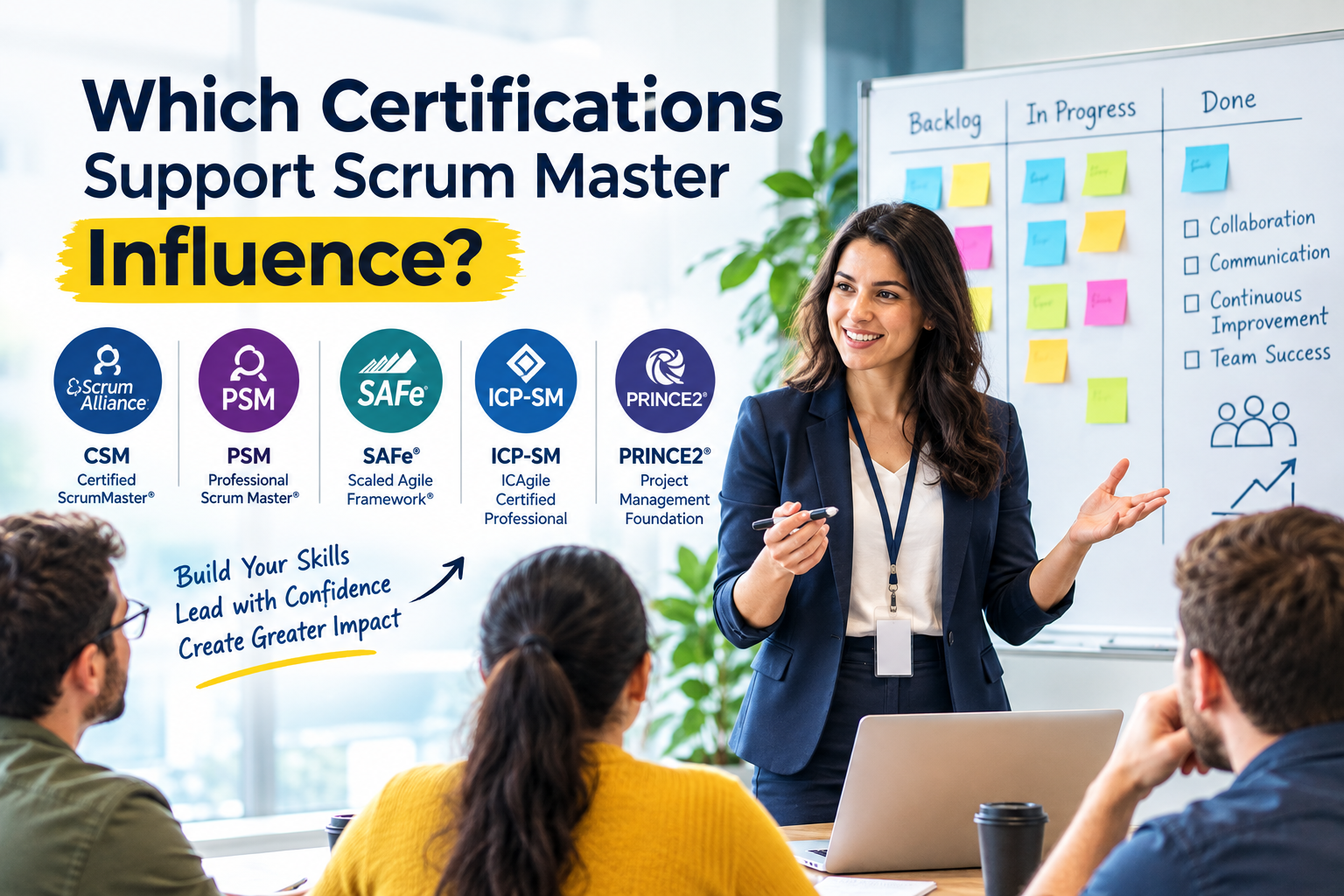
No certificate creates Scrum Master influence on its own. What a good course gives you is a shared vocabulary, credibility with employers and a structured way to practise the role. Combine that with the habits above and the effect builds over time. Training options include:
- Certified ScrumMaster (CSM) Certification: a widely recognised starting point covering Scrum practice, servant leadership and team coaching.
- Professional Scrum Master (PSM) Certification: a deep grounding in the Scrum Guide, useful when you need to explain confidently how the framework should work.
- SAFe Scrum Master: relevant in scaled environments, where influence has to cross team and programme boundaries.
- Agile Scrum Foundation (BCS/EXIN) and Agile Scrum Practitioner (BCS/EXIN): a structured pathway from fundamentals to applying Agile on real projects.
- iSQI Scrum Master Pro Certification: for professionals who want to move beyond the basics.
If pay and progression are on your mind, our guide to Scrum Master salary in Australia shows how experience and certification interact. The leadership side of the same story is covered in the Scrum Master promotion gap and why Scrum Masters are being replaced by Agile leaders, and if you want a step-by-step route, read how to move from Scrum Master to Agile leader. For wider team capability, Logitrain’s Agile training pathway is a good next step.
Common Mistakes That Widen the Gap
These habits quietly limit Scrum Master influence, even in teams that run Scrum well:
- Acting as the team’s secretary instead of its coach.
- Hiding behind the framework with phrases like “that isn’t Scrum” instead of explaining the business consequence.
- Escalating problems without options or evidence.
- Working around the Product Owner rather than with them.
- Keeping retrospective themes inside the team, so leaders never see the patterns.
- Waiting for an invitation before talking to senior people.
Key Takeaways
- The agile influence gap is the difference between running Scrum well and being heard when the business decides.
- Outcomes, evidence and options carry more weight than ceremony reports.
- Scrum Master influence grows without formal authority when you map stakeholders and partnering with the Product Owner.
- Certification builds credibility and vocabulary, but practice builds trust.
Frequently Asked Questions
What is Scrum Master influence?
Scrum Master influence is the ability to shape team and organisational decisions through evidence, relationships and coaching rather than formal authority. It shows up when leaders ask for your view before choosing priorities, funding or team structure.
Can a Scrum Master influence business decisions without authority?
Yes. Most influence in Agile work comes from credibility rather than position. Clear data, a strong relationship with the Product Owner and proposals that offer options all help a Scrum Master get heard.
Does a Scrum Master certification improve influence?
A certification improves your vocabulary, confidence and standing with employers, but influence comes from how you apply what you learn. Courses such as CSM and PSM are a solid foundation, and deliberate practice does the rest.
How long does it take to close the agile influence gap?
Many people notice early changes within a quarter of deliberate practice, such as regular stakeholder conversations and one-page metric summaries. Deeper influence takes longer and depends on your organisation’s culture.
Is this relevant to Scrum Masters outside IT?
Yes. Agile ways of working are used in marketing, HR, government and other functions, and the same influence habits apply wherever teams need support from senior decision-makers.
Closing the Gap Starts With One Conversation
You do not have to overhaul your role to start. Pick one stakeholder this week, ask what decision is worrying them, and bring one piece of honest evidence to the next conversation. Build from there, because Scrum Master influence compounds with every honest conversation. If you want structured training to back it up, explore our Scrum Master Certification courses or visit Logitrain to plan a wider Agile learning path for your team.