
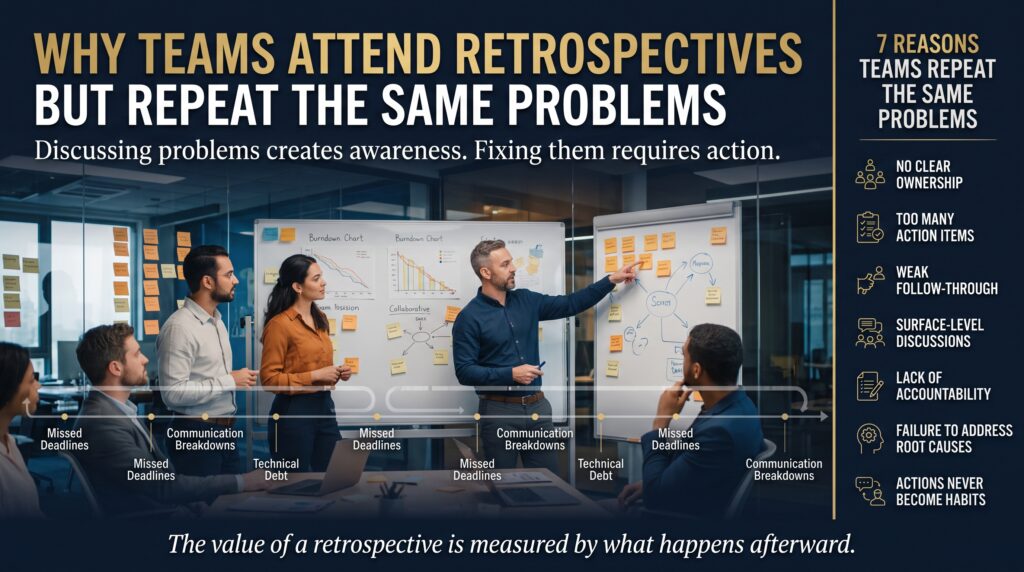

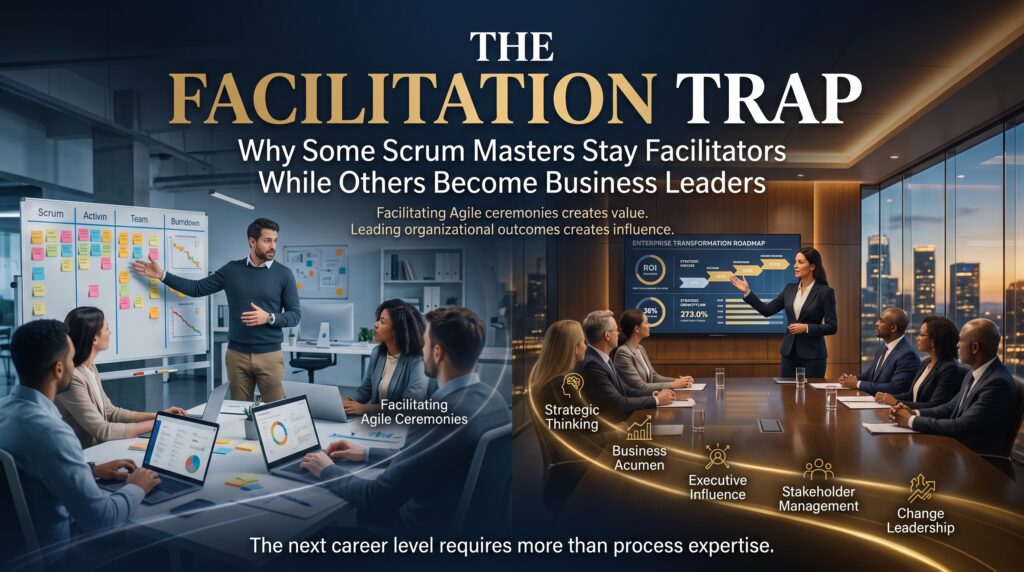
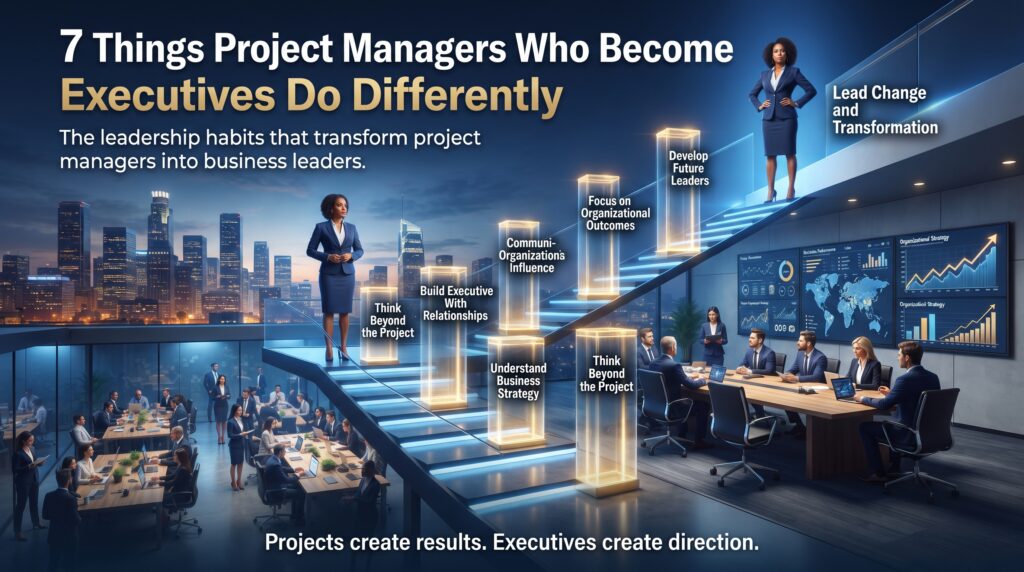
The facilitation trap is what happens when a Scrum Master becomes so good at running the team’s events that nobody ever asks them to do anything bigger. The stand-ups run on time. The retrospectives feel useful. The team likes you. And three years later, you’re still in the same seat, with the same title, wondering why a colleague who joined later is now sitting in the leadership conversations you’d like to be part of.
This guide unpacks the facilitation trap: why it catches capable people, how to spot it early, and what Scrum Masters who become business leaders do differently. If you’re searching for a way to advance your Scrum Master career in Australia, choose your next certification or work out how to be seen as a leader rather than a meeting host, read on.
What Is the Facilitation Trap in Scrum?
The facilitation trap is the career pattern where a Scrum Master is valued, and measured, almost entirely on how well they facilitate Scrum events. It’s a trap because facilitation is genuinely important. The Scrum Guide describes the Scrum Master as accountable for the team’s effectiveness, and running healthy events is part of that. But when facilitation becomes the whole job, the role shrinks into administration.
Here’s the uncomfortable part. Nobody sets the trap on purpose. Teams reward a smooth sprint. Managers like predictable ceremonies. You get praised for the thing you’re already good at, so you do more of it. Meanwhile, the work that actually builds a leadership profile, such as tying delivery to business results, influencing priorities and coaching beyond one team, never makes it onto your calendar.
Why Good Facilitation Becomes a Career Ceiling
If facilitation is valuable, why would it cap your progress? Three forces tend to be at work.
1. Ceremonies are easy to measure, outcomes are not
It’s simple to count sprints completed or retrospectives held. It’s harder to show that your coaching helped the team ship the right feature, cut rework or hit a revenue goal. So the easy metrics become the default, and the easy metrics describe a facilitator, not a leader.
2. A happy team hides the question
When a team is content, nobody questions the role. That sounds like a win, and it is, but it also removes any pressure to grow. The facilitation trap thrives in stable, friendly environments where nothing is visibly broken.
3. Senior leaders see cost, not impact
Executives rarely sit in sprint events. What they see is a headcount line and a few status updates. If you haven’t connected your work to something they care about, like customer outcomes, delivery speed or risk, the role looks like overhead. That’s when Scrum Masters get “restructured” or quietly stop being considered for bigger roles.
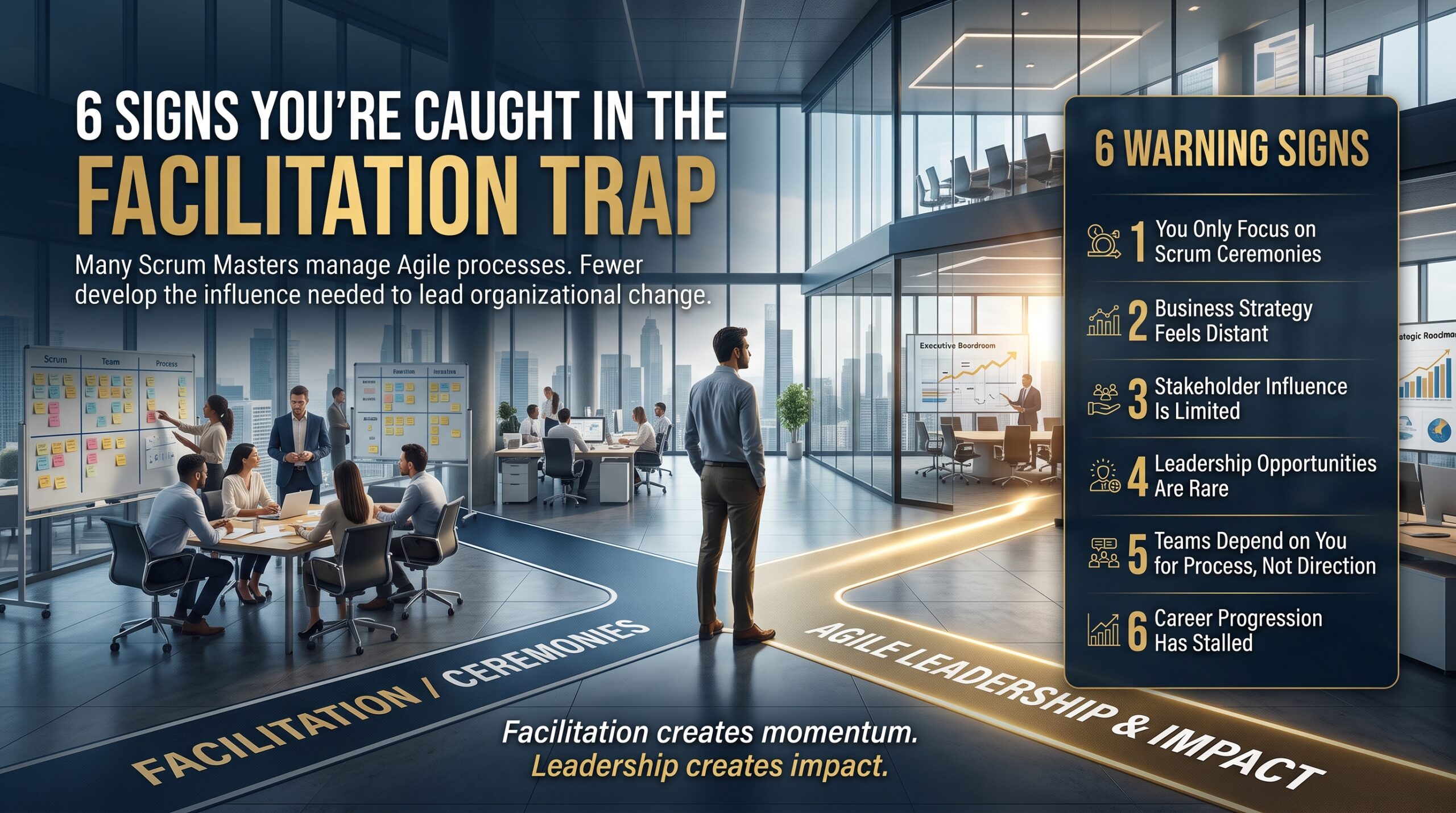
6 Signs You’re Caught in the Facilitation Trap
Read this list slowly. A few honest ticks are useful information, not a failure.
- Your week is mostly scheduling, running and following up on meetings.
- You can describe the team’s velocity but not the business goal the product supports.
- You raise team-level blockers but rarely challenge organisational ones.
- Stakeholders talk to the Product Owner and the team, but not to you.
- Your updates describe activity (“we completed the retro”) rather than outcomes (“cycle time dropped”).
- You haven’t coached anyone outside your own team in the past six months.
If four or more apply, you’re probably in the facilitation trap. The good news is that it’s one of the easiest career problems to fix, because the skills you already have are the foundation.
Scrum Master Facilitator vs Business Leader: A Quick Comparison
| Area | Stays a facilitator | Becomes a business leader |
| Main focus | Running events smoothly | Improving outcomes the business cares about |
| Who they talk to | The team and the Product Owner | Team, product, delivery leads and senior stakeholders |
| Impediments | Fixes team-level blockers | Surfaces and resolves organisational blockers |
| Reporting style | Activity and ceremony updates | Outcomes, trends and risks in business language |
| Coaching reach | One team | Multiple teams, Product Owners and managers |
| How others see the role | Helpful, but optional | Strategic, hard to replace |
How to Escape the Facilitation Trap: 5 Practical Steps
You don’t need to abandon facilitation. You need to stop letting it be the only thing you’re known for. These five moves work for most Scrum Masters and don’t require a new job title to begin.
- Learn the business behind the backlog. Ask your Product Owner and a senior stakeholder what the product needs to achieve this quarter. Write it at the top of your team’s board so every sprint ties back to it.
- Move from team blockers to system blockers. When the same delay appears three sprints running, it’s rarely a team problem. Document the pattern, estimate its cost in time or money, and take it to someone with authority to change it.
- Change your reporting language. Replace “we ran the review” with “lead time fell and the release risk is lower”. Short, plain and tied to outcomes.
- Widen your coaching footprint. Offer to coach a new Product Owner, run a workshop for another team or help a manager understand flow metrics. Influence grows when it travels.
- Back it up with credentials and practice. A recognised certification gives you shared vocabulary, credibility and a structured way to fill gaps. It won’t make you a leader on its own, but it makes the move easier to defend.
Certifications That Help You Leave the Facilitation Trap
Certification isn’t the escape route by itself. Think of it as a way to deepen your Scrum practice and show employers you take the craft seriously. On this site you’ll find three recognised options, so choose based on where you are today.
| Course | Who it suits | Why it helps |
| Agile Scrum Foundation (BCS/EXIN) | Newer Scrum Masters, project managers and team leads moving into Agile | Builds a solid, shared understanding of Scrum principles and roles |
| Agile Scrum Practitioner (BCS/EXIN) | Practitioners ready to apply Scrum in more complex, real-world scenarios | Moves you beyond theory into practical decision-making |
| iSQI Scrum Master Pro Certification | Experienced Scrum Masters who want a stronger professional credential | Supports a more advanced, leadership-oriented profile |
Exam formats and prerequisites change, so check each course page for current details. EXIN publishes information on its Agile Scrum qualifications, and the Agile Alliance is a helpful, independent place to keep reading about Agile practice as your career grows.
Two Scrum Masters, Two Very Different Paths
Here’s a simple composite example, not a real case study. Picture two Scrum Masters, Priya and Tom, both with similar experience and both well liked.
Tom spends his week perfecting events. His retros are creative and his stand-ups finish in ten minutes. Priya runs good events too, but she also keeps a short list of recurring blockers she calls “the expensive ones”. Each month she takes one to a delivery manager with a rough estimate of the cost of leaving it unresolved.
Within a year, Priya is invited to planning discussions at programme level. Tom is still the team’s favourite facilitator, which is a fine thing to be, but his role hasn’t changed. The difference wasn’t talent. It was whether either of them left the facilitation trap.
The Facilitation Trap Across Australian Cities
Where you work shapes which kind of leadership is valued. Demand changes over time, so use this as a starting point and check current job listings in your city.
| City | Where Agile leadership tends to be needed | Good starting course |
| Sydney | Banking, financial services and large enterprise programmes | Agile Scrum Practitioner |
| Melbourne | Technology, health, education and retail delivery teams | Agile Scrum Foundation |
| Brisbane | Infrastructure, government and growth ahead of the 2032 Olympic and Paralympic Games | iSQI Scrum Master Pro |
| Perth | Resources, energy and engineering organisations modernising delivery | Agile Scrum Foundation |
| Adelaide | Defence, advanced manufacturing and digital services | Agile Scrum Practitioner |
| Canberra | Federal government digital delivery and large public programmes | iSQI Scrum Master Pro |
Training is available across major Australian cities and online, so you can learn without relocating or taking long breaks from work. Browse all training locations for details.
Training That Fits Around a Working Scrum Master
Most Scrum Masters are juggling sprints, stakeholders and a personal life. The right course format is the one you’ll complete. Our Scrum Master Certification training is offered through online and live classes, with hands-on practice, mock tests and exam preparation tips, plus support from enrolment through to completion.
- Flexible timings: weekday, weeknight and weekend options.
- Hands-on learning: practise Scrum techniques on realistic workplace scenarios.
- Exam preparation: mock tests and guidance to build confidence.
- Group training: enquire about in-house options for your whole team.
Not sure which course suits your next step? Call 1300 649 299 or contact the team, and we’ll point you in the right direction. You can also explore the wider Agile training pathway at Logitrain.
Frequently Asked Questions About the Facilitation Trap
What is the facilitation trap for Scrum Masters?
The facilitation trap is when a Scrum Master is valued mainly for running Scrum events well, so their role never expands into coaching, influence or business outcomes. It limits promotion even when the person is highly skilled.
Can a Scrum Master become a business leader?
Yes. Many Scrum Masters move into delivery lead, Agile coach or programme roles. The shift usually comes from tying work to business outcomes, solving organisational blockers and coaching beyond a single team.
Is facilitation still an important Scrum Master skill?
Absolutely. Good facilitation is a foundation. The facilitation trap only appears when facilitation is the only thing you’re known for.
Which Scrum Master certification should I choose?
It depends on your experience. Agile Scrum Foundation suits those new to Scrum, Agile Scrum Practitioner suits those applying Scrum in real scenarios, and iSQI Scrum Master Pro suits experienced Scrum Masters. Check each course page for current details.
Can I train online if I live outside Sydney or Melbourne?
Yes. Courses are available online and across major cities, including Brisbane, Perth, Adelaide and Canberra. Visit our FAQs for more detail.
Final Thoughts: Facilitate, but Don’t Stop There
Facilitation is where great Scrum Masters start, not where they should finish. The facilitation trap is comfortable, familiar and easy to miss, which is exactly why it catches so many good people.
Start small. Pick one blocker to escalate, one outcome to report and one person outside your team to coach. Then back your progress with the right course. Browse the full course list, read more career guides on the blog or get in touch to plan your next step out of the facilitation trap.