
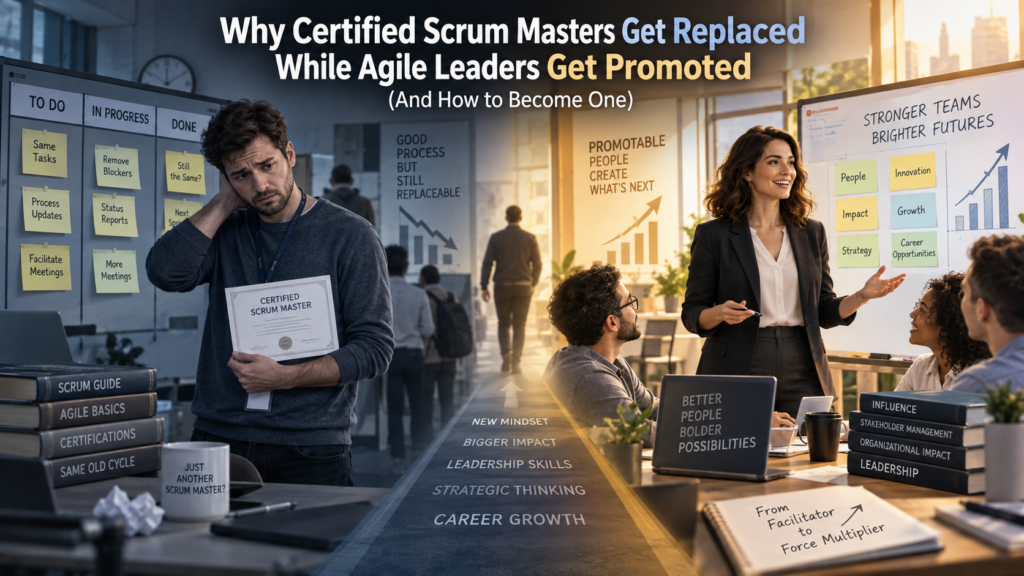
Every year, thousands of professionals complete a Certified Scrum Master course, add the badge to LinkedIn, and expect the job security and promotions that come with it. Then a redundancy round happens, and the person let go is the Certified Scrum Master who never grew past the certificate while the agile leader down the hall, sometimes holding the exact same credential, gets handed a bigger team instead.
This isn’t a coincidence, and it has nothing to do with which training provider issued the certificate. It comes down to what a Certified Scrum Master does with it after the exam. Below, we unpack why so many certified Scrum Masters become the first cut when budgets tighten, what agile leaders do differently, and the practical path from one to the other.
What’s Actually Different Between a Certified Scrum Master and an Agile Leader?
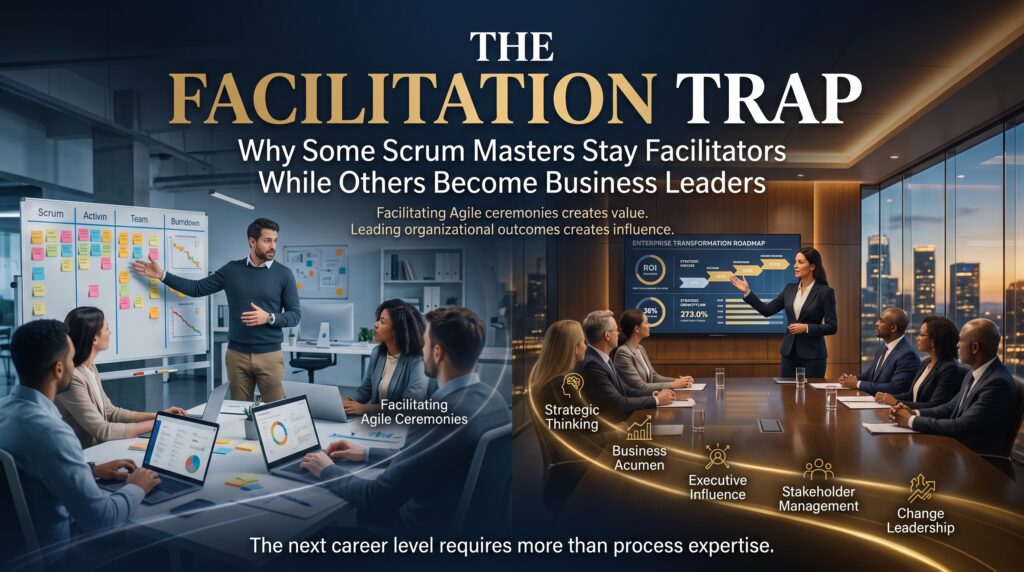
A Certified Scrum Master is a role. An agile leader is an outcome. On paper, both terms describe someone who helps teams work better using the Scrum framework. In practice, organisations under budget pressure treat them very differently.
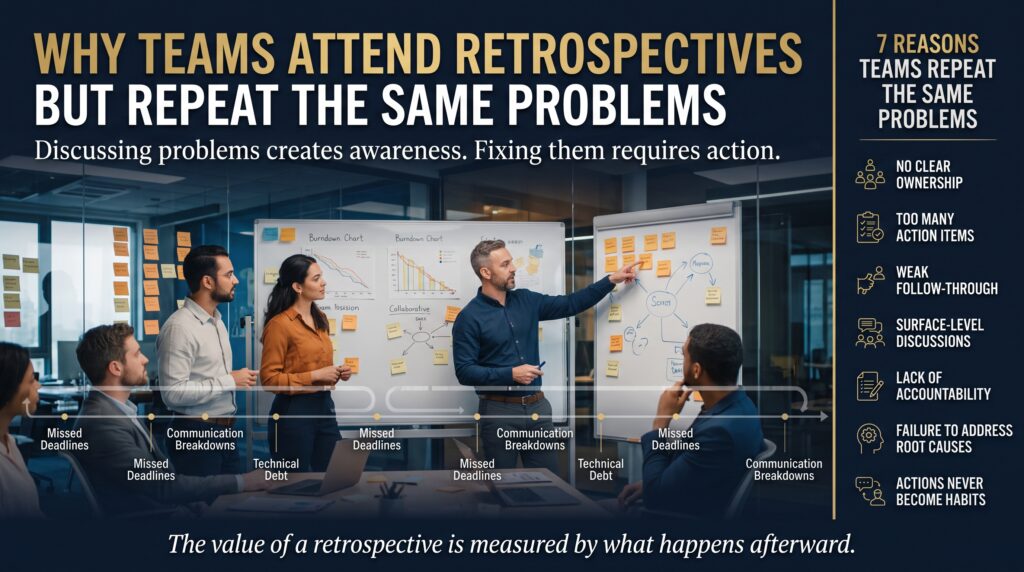
A Certified Scrum Master, in the way most job descriptions define it, protects the Scrum process: running the daily stand-up, facilitating the sprint retrospective, tracking the burndown chart, and shielding the team from interruptions. That’s valuable early in an agile transformation but it’s also the part of the role that’s easiest to absorb into a Product Owner’s responsibilities or distribute across a self-managing team once that team matures.
An agile leader does all of that too, but treats it as the floor, not the ceiling. They connect sprint outcomes to business results, coach other Scrum Masters and Product Owners, influence roadmap decisions, and are trusted in rooms where budgets and headcount get decided. That difference in scope is exactly why one group survives restructuring and the other doesn’t.
Why Certified Scrum Masters Get Replaced
None of the reasons below are about competence on exam day. They’re about what happens in the eighteen months after certification.
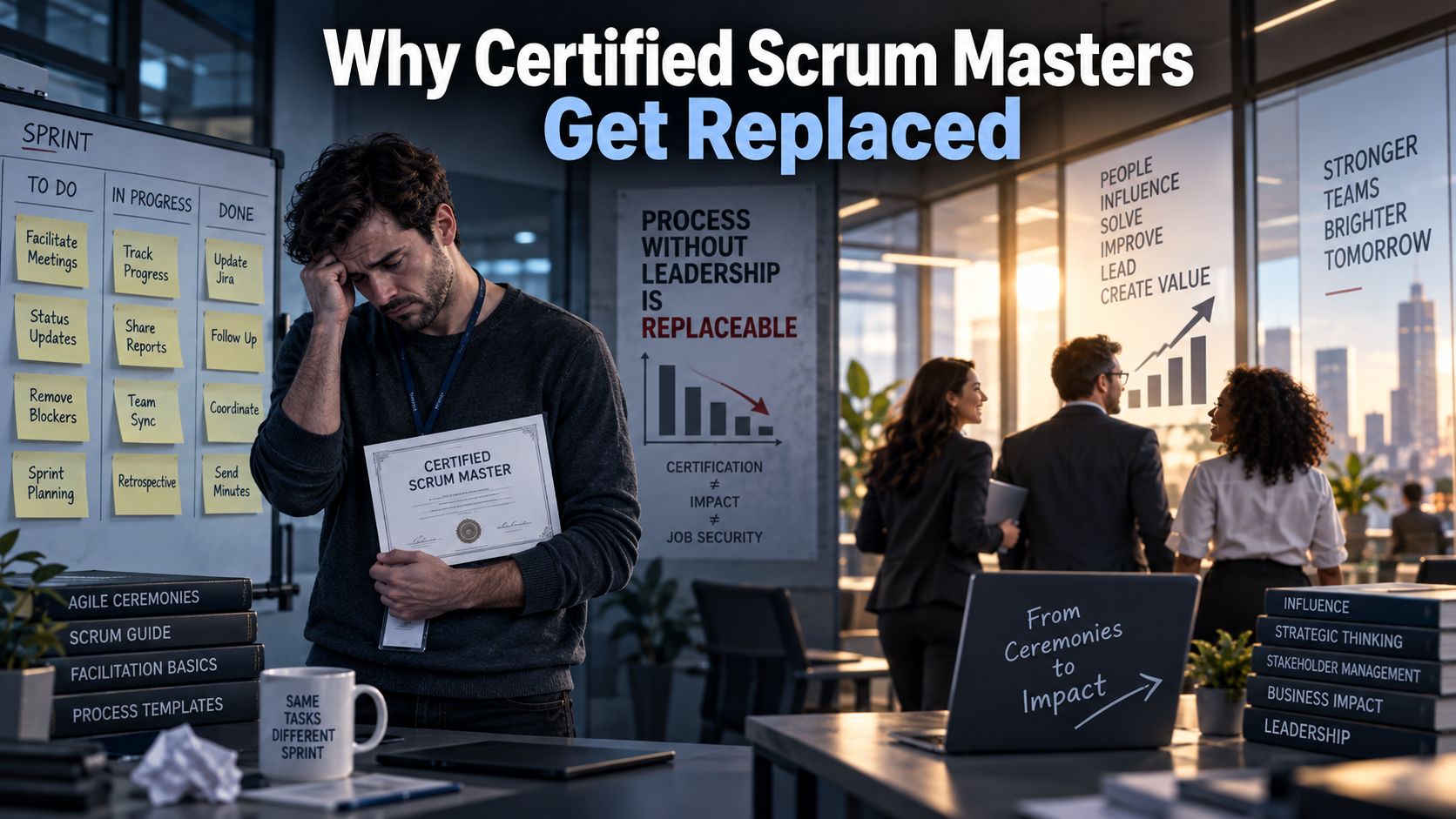
1. They stop growing at the certificate
Passing the exam feels like the finish line, but for a Certified Scrum Master it’s the entry point. Professionals who stop investing in their skills the moment they’re certified plateau at exactly the level the job description describes and a role that’s easy to describe in one sentence is easy to replace.
2. They manage the process, not the people
A Certified Scrum Master who focuses purely on ceremonies stand-ups, retrospectives, backlog refinement is optimising for compliance with the Scrum framework rather than for team performance. Mature agile teams eventually run these ceremonies themselves, which quietly removes the need for a dedicated process facilitator.
3. They can’t translate sprint velocity into business language
Executives don’t get excited about story points. When a Certified Scrum Master can only report on velocity and burndown charts, leadership sees activity, not impact. Agile leaders instead report in terms of customer outcomes, cycle-time reduction, and cost avoidance language that survives a budget review.
4. They avoid conflict instead of coaching through it
Servant leadership is often misread as conflict-avoidance. A Certified Scrum Master who smooths over every disagreement to “keep the team happy” prevents the hard conversations that actually make teams better. Agile leaders lean into productive conflict because that’s where real improvement happens.
5. They never scale beyond one team
Staying attached to a single Scrum team caps both visibility and value. The moment a company needs to consolidate Scrum Master headcount, the person coaching one team is easier to cut than the person supporting scaled agile delivery across several.
6. They build no influence outside the Scrum team
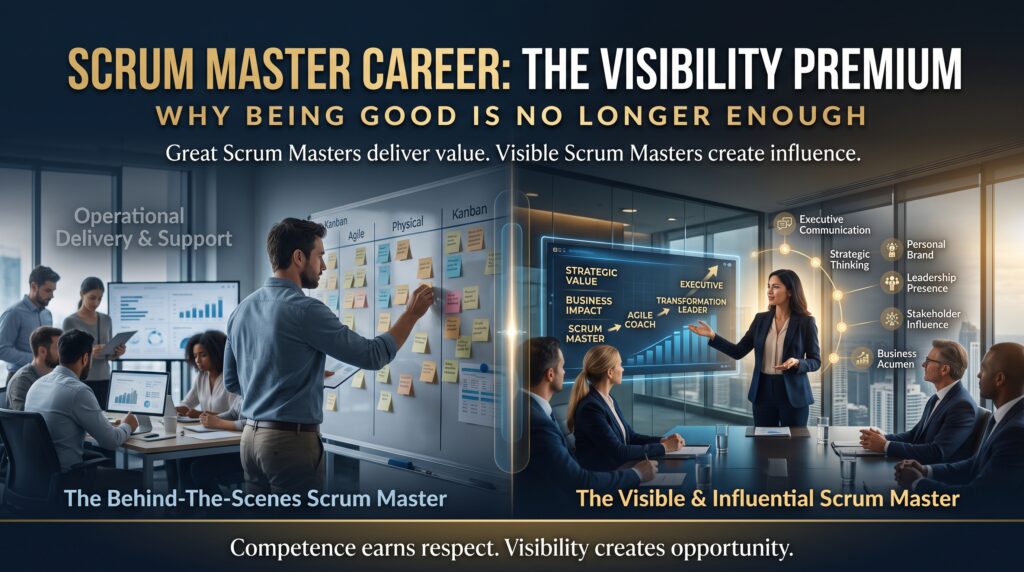
If the only people who know your name are the eight people in your daily stand-up, you have no internal sponsor when restructuring conversations happen. Agile leaders build relationships with Product, Engineering leadership, and stakeholders, so someone advocates for them when headcount decisions are made.
Why Agile Leaders Get Promoted Instead
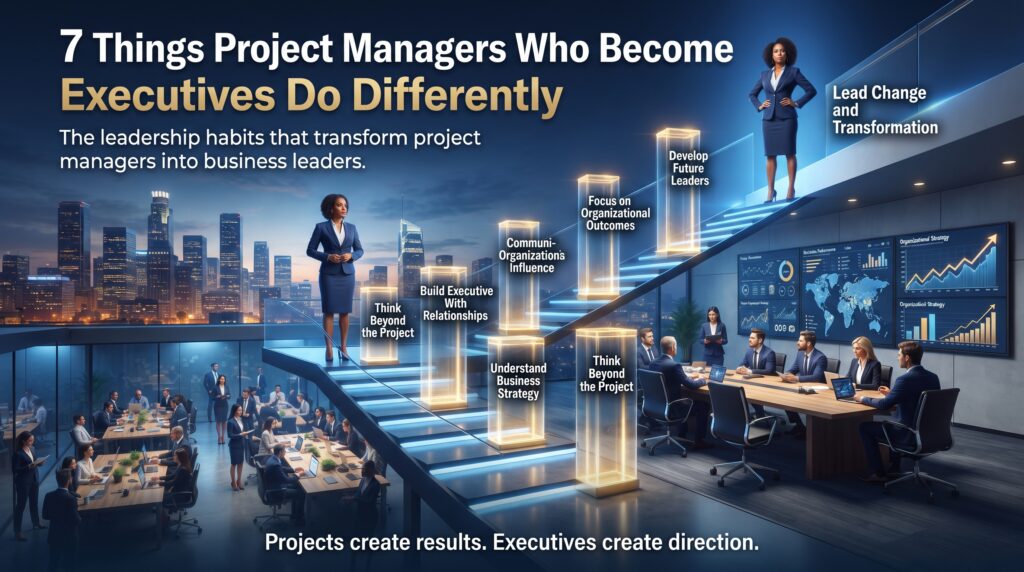
Agile leaders get promoted because they’ve made themselves difficult to replace. A few patterns show up consistently in the people who move from Scrum Master into Agile Coach, Delivery Lead, or Head of Agile Delivery roles:
- They tie every sprint outcome back to a business metric leadership already cares about.
- They coach other Scrum Masters and Product Owners, not just their own team.
- They’re fluent in scaled agile approaches such as SAFe, LeSS, and Scrum@Scale, not just single-team Scrum.
- They use data — cycle time, lead time, defect escape rate to make their impact visible.
- They build trust with stakeholders outside the delivery team, so they’re already known before the promotion conversation happens.
None of this replaces the underlying Scrum Master certification it builds on top of it. The certification proves you know the framework. Leadership behaviour is what proves you can be trusted with more of it.
How to Go From Certified Scrum Master to Agile Leader
If you’re a Certified Scrum Master who wants to be the person promoted rather than the person managed out, the path is well worn. It isn’t mysterious it’s a sequence most people simply never follow through on.
Step 1: Start with a certification that actually carries weight
Not every course carries the same weight with employers. Start with a Scrum Master certification backed by a recognised accrediting body such as the Scrum Alliance or Scrum.org, so the credential itself opens doors rather than needing to be explained in every interview.
Step 2: Build facilitation and coaching skills beyond the ceremonies
Learn conflict facilitation, coaching conversations, and how to run a retrospective that produces real change rather than a list nobody actions. This is the skill set that separates a process administrator from a coach.
Step 3: Get fluent in scaled agile frameworks
Single-team Scrum is the entry point, not the ceiling. Understanding how delivery works across multiple teams through SAFe, LeSS, or Scrum@Scale is what qualifies a Certified Scrum Master for coach-level and program-level roles.
Step 4: Learn to report in business outcomes, not ceremony metrics
Practise translating sprint results into the metrics your stakeholders already track: time-to-market, customer satisfaction, cost per feature, defect rates. This single habit does more for promotion prospects than almost anything else on this list.
Step 5: Mentor other Scrum Masters
Volunteering to coach less experienced Scrum Masters formally or informally is usually the first unofficial sign that someone is functioning above their job title. It’s also one of the clearest signals a promotion panel looks for.
Step 6: Build visibility outside your own team
Present retrospective learnings to leadership. Join or start a community of practice. Volunteer for cross-team initiatives. Influence is built in rooms outside your daily stand-up, not inside it.
Certified Scrum Master Demand and Career Growth Across Australia
Demand for a Certified Scrum Master with genuine leadership skills is strong across every major Australian tech and business hub. Agile roles in Sydney, Melbourne, Brisbane, Perth, Adelaide, Canberra, and the Gold Coast increasingly list “agile leadership” or “agile coaching” experience as a preferred skill, not just Scrum Master certification a clear sign employers are hiring for the outcome, not the title.
Salaries reflect the same pattern. Certified Scrum Masters who stay purely process-focused tend to plateau, while those who move into Agile Coach, Delivery Lead, or Head of Agile roles see the largest salary jumps in their careers regardless of which Australian city they’re based in.
Choosing the Right Scrum Master Certification Course
Since the certification is the starting point for everything above, it’s worth choosing carefully. Look for a course that offers:
- Accreditation from a globally recognised body, not an unaccredited private badge.
- Trainers with real, current delivery experience not just a slide deck.
- A curriculum that goes beyond exam prep into facilitation, coaching, and servant leadership.
- A pathway or alumni network that supports you after certification, not just up to exam day.
The Scrum Master certification course at Scrum Master Certification is built around exactly this: Scrum Alliance–accredited training delivered by experienced, practising agile trainers, designed to prepare candidates for both the exam and the leadership expectations that follow it.
Frequently Asked Questions
Is a Certified Scrum Master certification still worth it in 2026?
Yes it remains the recognised entry credential for agile delivery roles and is often a hiring filter on its own. What determines long-term job security is what a Certified Scrum Master does with the certification afterward, not the certification itself.
What is the real difference between a Scrum Master and an agile leader?
A Scrum Master protects the Scrum process for one team. An agile leader uses that same foundation to influence outcomes across multiple teams, coach other practitioners, and connect delivery work to business results.
How long does it take to become a Certified Scrum Master?
Most accredited courses run two to three days, followed by an online exam. Building the leadership skills covered in this article typically takes six to eighteen months of deliberate practice afterward.
Can a Certified Scrum Master become a Product Owner or Agile Coach?
Yes. The Scrum Master role is one of the most common launch points into Product Owner, Agile Coach, and Delivery Lead careers, particularly for professionals who build the outcome-focused skills described above.
Final Thoughts
A Certified Scrum Master credential gets you in the room. What you do with it decides whether you’re still in that room in two years. The professionals who get promoted aren’t smarter or luckier they simply treated certification as the beginning of an agile leadership journey, not the destination.
If you’re ready to start that journey the right way, explore the Scrum Master certification course and take the first step toward becoming the agile leader your organisation promotes instead of replaces.