
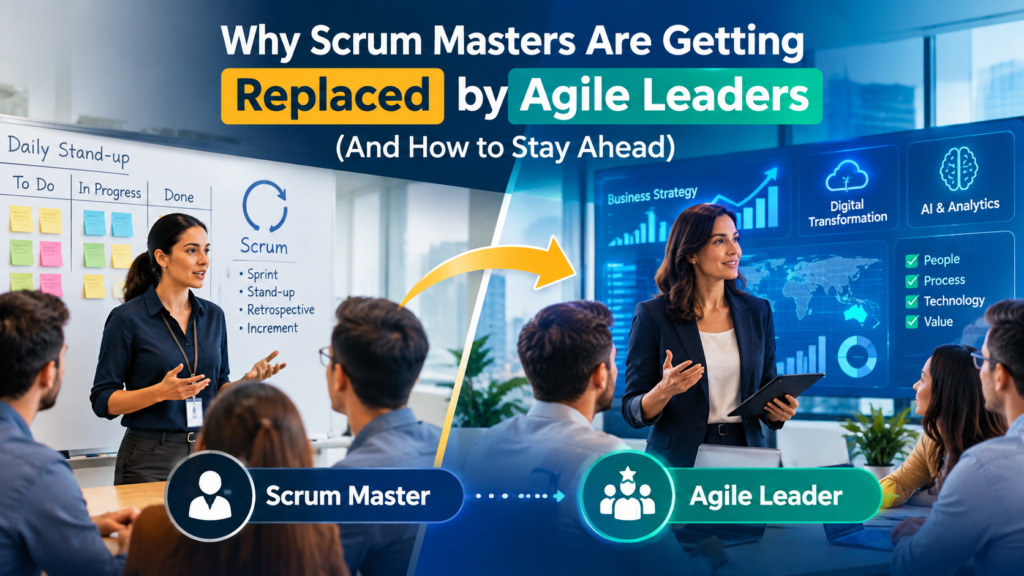
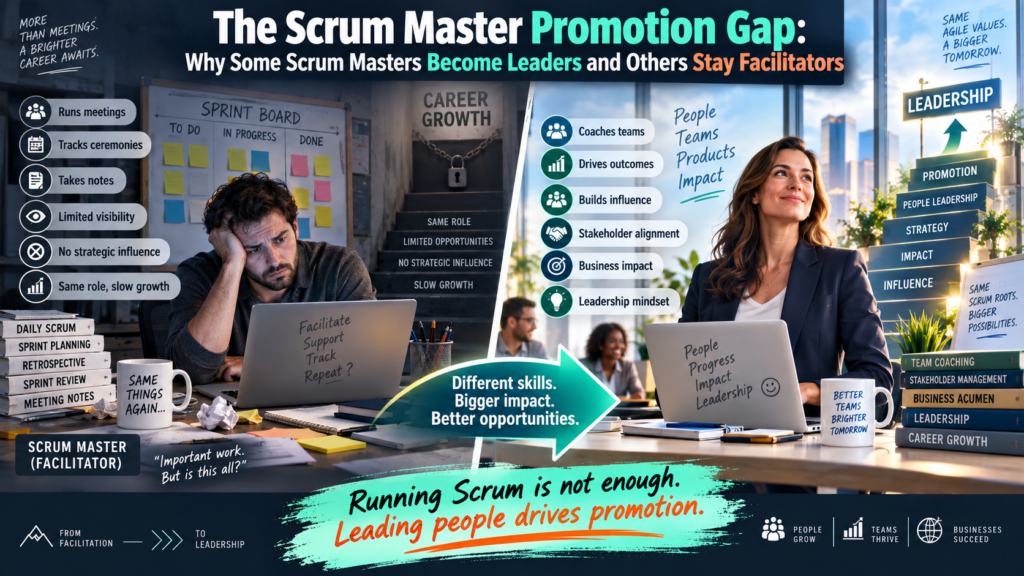
If you’ve noticed more job ads asking for an Agile Leader instead of a “Scrum Master,” you’re not imagining it. From Melbourne to Sydney, Brisbane, Perth, Adelaide and Canberra, hiring managers are quietly rewriting job titles and rewriting expectations along with them. The Scrum Master who runs stand-ups, updates the board and keeps ceremonies on schedule is increasingly being asked to grow into something bigger: an Agile Leader who drives business outcomes, not just process.
This isn’t a case of Scrum dying. Scrum is still the most widely used Agile framework in the world. What’s changing is who gets to keep the title and the paycheque that goes with it.
The Shift Nobody Saw Coming
For years, the Scrum Master role was defined by ceremony: daily stand-ups, sprint planning, retrospectives, backlog grooming. That was enough when Agile adoption was new and teams simply needed someone to enforce the framework.
That’s no longer the case. According to the World Economic Forum’s Future of Jobs Report, close to 40% of core professional skills are expected to change by 2030 — and coordination-heavy roles like traditional Scrum Mastering sit squarely in the firing line. Organisations aren’t cutting Agile roles; they’re upgrading them. The professionals who only run ceremonies are being quietly filtered out in favour of an Agile Leader who can coach, influence stakeholders and tie delivery back to business value.
What’s Actually Driving Scrum Masters to Become Agile Leaders
A few forces are converging at once, and together they explain why “Agile Leader” is showing up in job titles that used to say “Scrum Master.”
1. AI Is Automating the Admin, Not the Leadership
Sprint boards that update themselves, AI-generated retrospective summaries and automated stand-up bots have already eaten the administrative half of the job. What AI cannot do is coach a struggling team, resolve conflict between a product owner and a developer, or negotiate scope with an anxious stakeholder. That’s exactly the gap an Agile Leader is expected to fill.
2. Scaled Agile Frameworks Demand Broader Skills
As companies grow past a single team, they move to scaled models such as SAFe, LeSS or Nexus. Coordinating multiple teams, release trains and cross-functional dependencies requires far more than knowledge of one framework — it requires the strategic, organisation-wide thinking of an Agile Leader.
3. Businesses Want ROI, Not Just Rituals
Leadership teams are asking a blunt question: what did the last sprint actually deliver for the business? A Scrum Master who can answer only in terms of velocity and burndown charts struggles here. An Agile Leader connects delivery metrics to revenue, customer outcomes and strategic goals.
4. Agile Has Spread Beyond IT
Marketing, HR, finance and operations teams now run Agile ways of working too. That means Agile Leaders are increasingly hired to guide teams that have never touched a line of code — a very different, much broader skill set than classic software-focused Scrum Mastering.
Scrum Master vs Agile Leader: What’s the Real Difference?
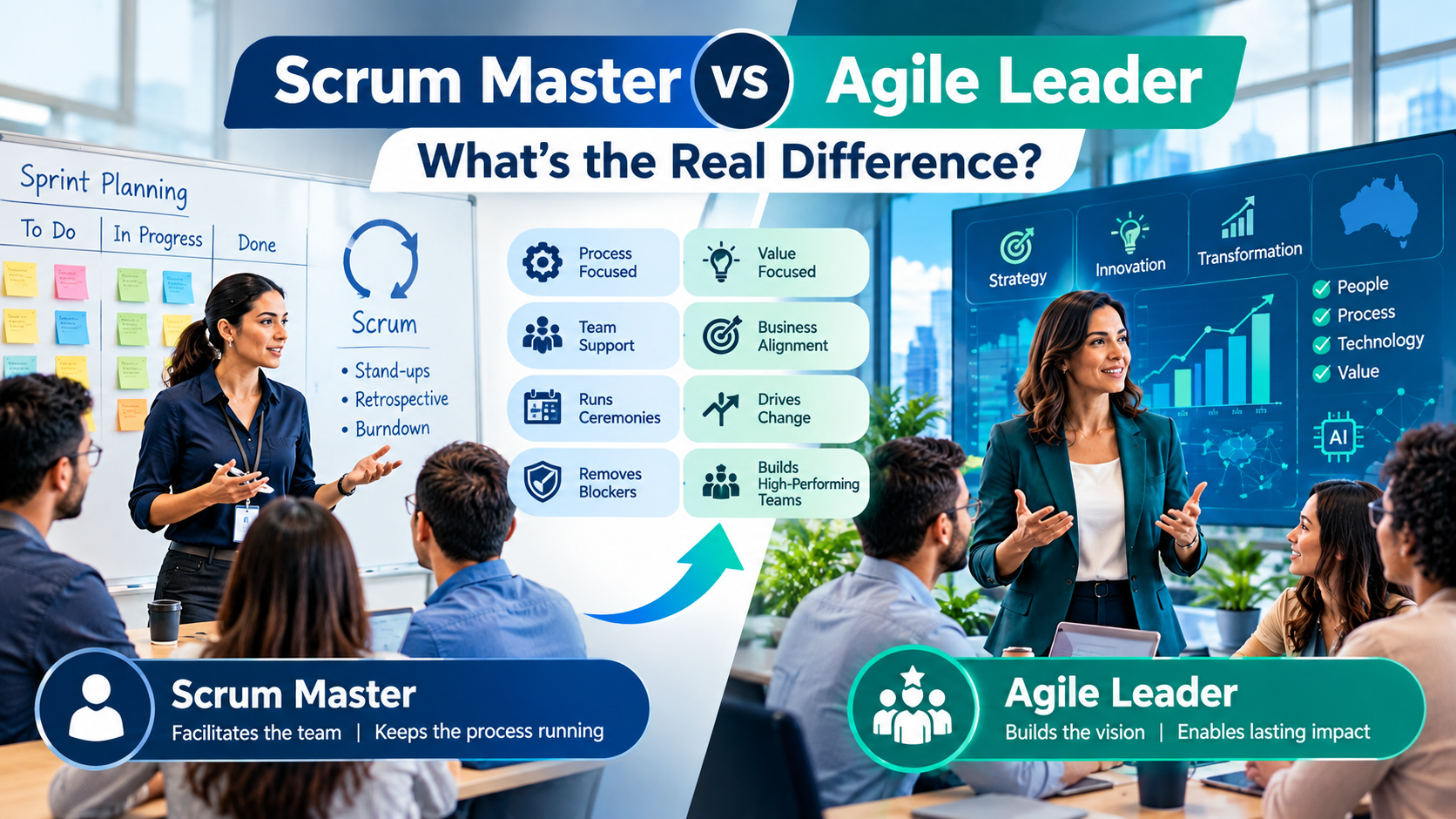
| Area | Scrum Master | Agile Leader |
| Focus | One team, one framework | Multiple teams, business outcomes |
| Core skill | Facilitation | Coaching and influence |
| Reports on | Velocity, burndown | Business value, ROI, delivery outcomes |
| Reach | Sprint level | Organisational / transformation level |
| Typical next title | Senior Scrum Master | Agile Coach, Delivery Lead, Head of Agile Delivery |
5 Warning Signs Your Scrum Master Role Might Be at Risk
- Your main tasks are updating Jira, sending calendar invites and reading out the burndown chart.
- You’ve never presented delivery results directly to senior stakeholders or leadership.
- You only know one framework, and your organisation is scaling to multiple teams.
- You can’t explain, in business terms, what value your team delivered last quarter.
- Your certification hasn’t been refreshed since your first Scrum Master course.
None of these are fatal on their own. But together, they’re a signal that it’s time to move from facilitating ceremonies to leading outcomes in other words, to start becoming an Agile Leader.
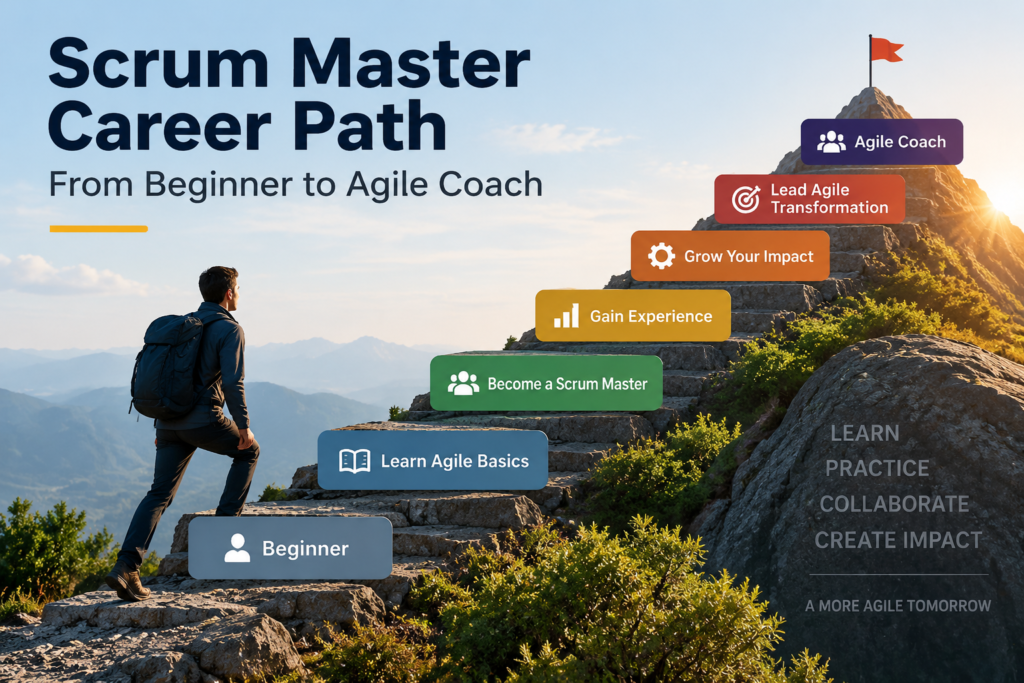
How to Move From Scrum Master to Agile Leader (And Stay Ahead)
The good news: the shift toward Agile Leadership is a career upgrade, not a threat, for anyone willing to build a few new skills.
Upgrade Your Certification
A foundation-level certificate is a great start, but Agile Leaders are expected to hold credentials that go deeper into scaled delivery and practitioner-level skills. Courses such as the Agile Scrum Foundation (BCS/EXIN), the Agile Scrum Practitioner (BCS/EXIN) and the iSQI Scrum Master Pro Certification are built exactly for this transition from framework facilitator to true Agile Leader.
Build Stakeholder and Business Skills
Practise translating sprint outcomes into business language. The Scrum.org and Agile Alliance resource libraries are excellent starting points for understanding how the role is evolving industry-wide.
Learn a Scaled Agile Framework
SAFe, LeSS or Nexus knowledge signals that you can operate above the single-team level a non-negotiable for most Agile Leader roles today.
Coach Instead of Just Facilitate
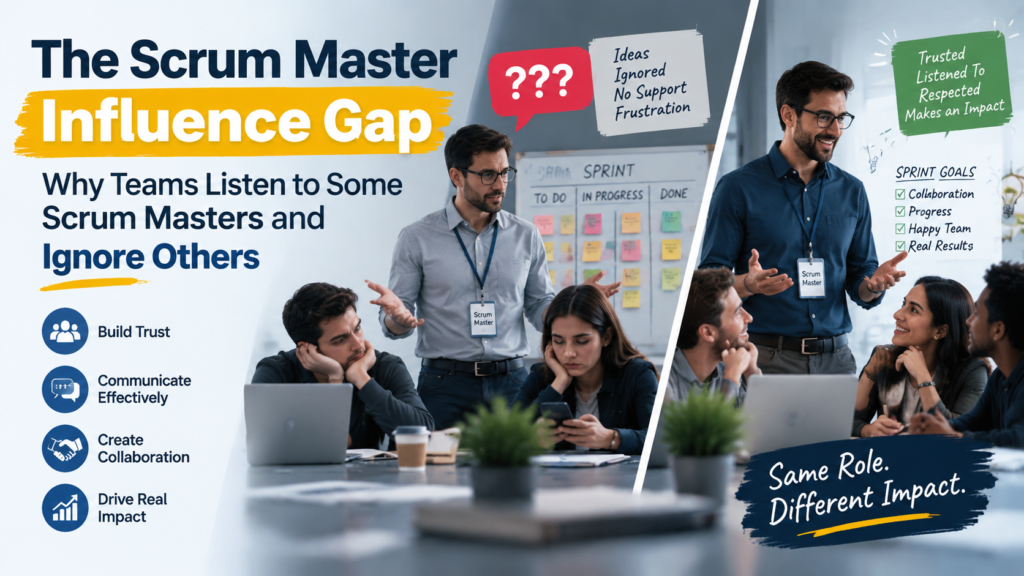
Agile Leaders spend less time running meetings and more time developing people mentoring product owners, coaching new Scrum Masters and helping teams solve their own problems.
Get Comfortable With AI-Powered Delivery Tools
Understanding how AI can automate reporting, forecasting and admin work frees you up to focus on the leadership work that actually keeps you employable.
Where to Train: Scrum Master Certification Across Australia
Whether you’re based in Melbourne, Sydney, Brisbane, Perth, Adelaide or Canberra, the path from Scrum Master to Agile Leader starts with the right training. Our Scrum Master Certification courses are designed to build exactly the coaching, stakeholder and scaled-delivery skills employers now expect from an Agile Leader with flexible online and in-person options across every major Australian city.
Want more career insights like this? Visit our Blog, check our FAQs, or contact our team to find the right course for where you want your Agile career to go next.
Final Thoughts
Scrum Masters aren’t being replaced because Scrum failed. They’re being replaced because the role stopped growing while the business world kept moving. The professionals thriving in 2026 are the ones who treated “Scrum Master” as a starting point, not a ceiling and made the deliberate move to become an Agile Leader along the way.
Ready to make the shift? Explore our Scrum Master Certification courses and start building the Agile leadership skills employers are hiring for right now.