
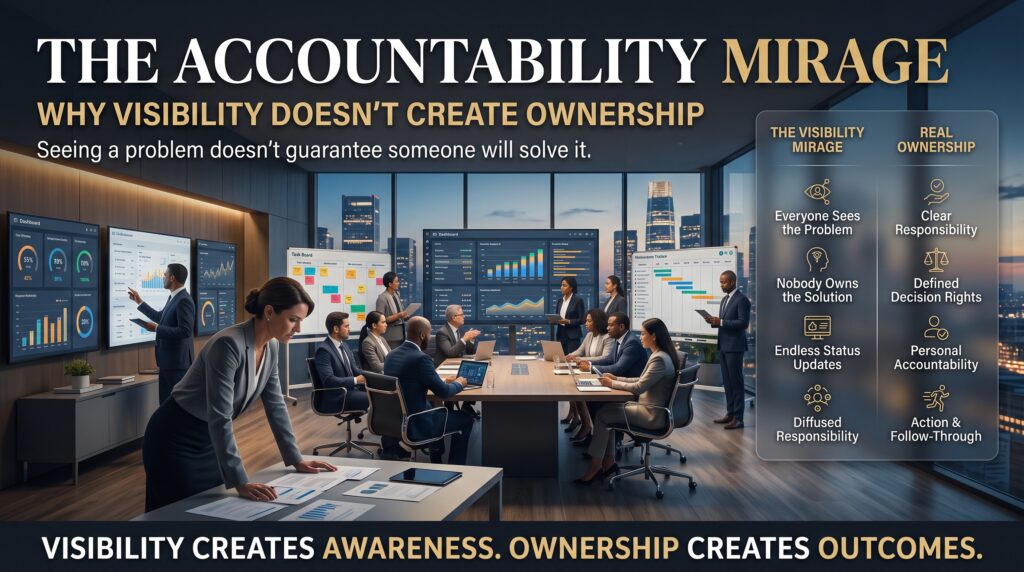
The accountability mirage is the comforting illusion that once work is visible, someone must own it. The board is up to date, the dashboard is green, the stand-up is on the calendar, and yet when a blocker lingers or a quality problem surfaces, nobody quite stands up and says “that one is mine.” From a distance, the team looks accountable. Up close, there is nothing solid underneath.
If you are a Scrum Master, project manager, team lead or aspiring Agile professional, you have almost certainly met this problem. In this guide, we explain why visibility and ownership are not the same thing, how the accountability mirage shows up in real teams, and eight practical ways to turn transparency into genuine commitment. We also cover how Scrum training and certification can give you the tools to do it.
Key Takeaways
- Visibility shows who is doing what. Ownership means someone is answerable for the outcome.
- Dashboards, boards and reports can feed the accountability mirage by creating a false sense of control.
- Scrum builds ownership through clear accountabilities, the Sprint Goal and the Definition of Done.
- Scrum Masters can coach teams and leaders out of the mirage, and certification builds those skills.
What Is the Accountability Mirage?
A mirage looks like water but gives you nothing to drink. The accountability mirage works the same way. Tools such as task boards, burndown charts, status reports and RAG ratings make work look managed, so everyone relaxes. But being able to see a task is not the same as feeling responsible for it.
Real ownership has three ingredients: a clear commitment, the authority to act on it, and a personal stake in the result. Visibility supplies none of these. It simply makes information available. When organisations confuse the two, they invest heavily in reporting and wonder why delivery still stalls.
Why Visibility Feels Like Ownership (But Is Not)
Seeing is not the same as owning
When a task card sits on a shared board, everyone can see it, which means everyone assumes someone else is watching it. Psychologists call this diffusion of responsibility: the more people who are aware of a problem, the less personally responsible each person feels. A very visible task can end up with very little ownership.
Metrics become the goal
Goodhart’s Law is often summarised as the idea that when a measure becomes a target, it stops being a good measure. If a team is judged on velocity or tickets closed, people learn to move the numbers instead of improving outcomes. The dashboard stays green while real accountability drains away.
Surveillance replaces trust
Some leaders use visibility as a way to monitor people. That may produce compliance, but it rarely produces ownership. People who feel watched tend to protect themselves, not the product. The accountability mirage thrives in cultures where transparency is used to assign blame instead of to learn.
Activity is mistaken for progress
A busy board with many moving cards feels productive. But if nobody is clear on the goal or the definition of finished work, activity can hide the fact that nothing valuable is actually shipping.
Seven Signs Your Team Is Caught in the Accountability Mirage
- Everyone updates the board, but blockers stay open for days.
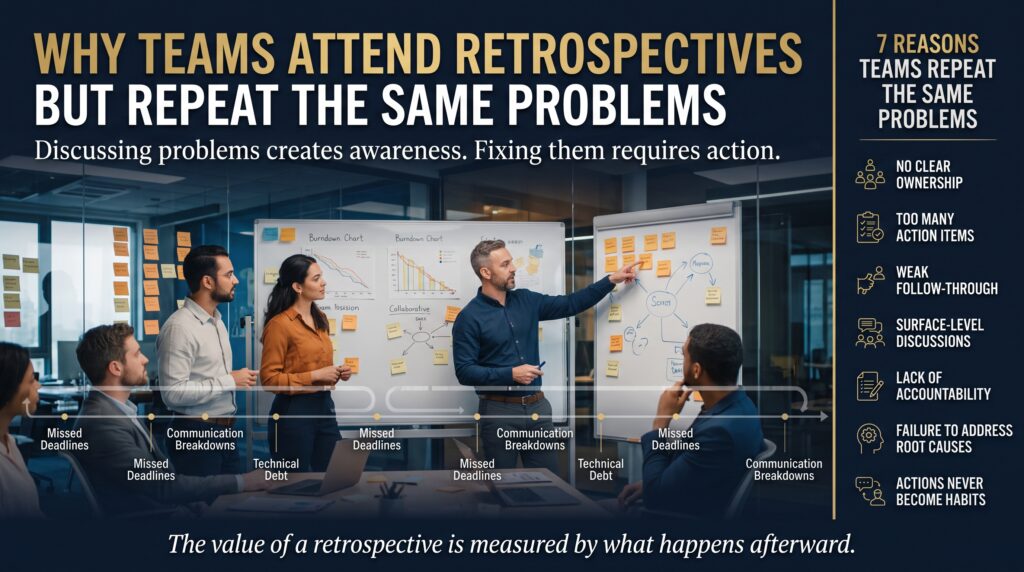
- Action items from retrospectives repeat every sprint with no owner.
- Status reports are green until the week of the deadline.
- Quality issues are described as “the team’s problem,” never one person’s concern.
- Managers ask for more reports instead of asking what is getting in the way.
- People say “it was on the board” when something goes wrong.
- Commitments are made in meetings but forgotten by the next day.
If three or more of these sound familiar, the accountability mirage is probably costing you more than you realise.
Transparency vs Ownership: What the Scrum Guide Actually Says
Scrum is built on three pillars: transparency, inspection and adaptation. The official Scrum Guide is clear that transparency is only the starting point. Inspecting what you see and adapting based on it is what creates value. Without the second and third pillars, transparency is just a display, and it feeds the accountability mirage.
Scrum also uses the word “accountabilities” deliberately. The Scrum Guide describes the Developers as accountable for creating a usable Increment each Sprint, the Product Owner as accountable for maximising value and managing the Product Backlog, and the Scrum Master as accountable for the Scrum Team’s effectiveness. Each accountability has a name attached to it. That clarity is what separates real ownership from a shared board that nobody truly owns.
Scrum’s five values (commitment, focus, openness, respect and courage) matter just as much. Commitment is not a promise to be on the board. It is a promise to achieve the goal. Courage is what allows someone to say “I own this” when it might go wrong. You can read more about these ideas through Scrum.org, one of the leading Scrum communities.
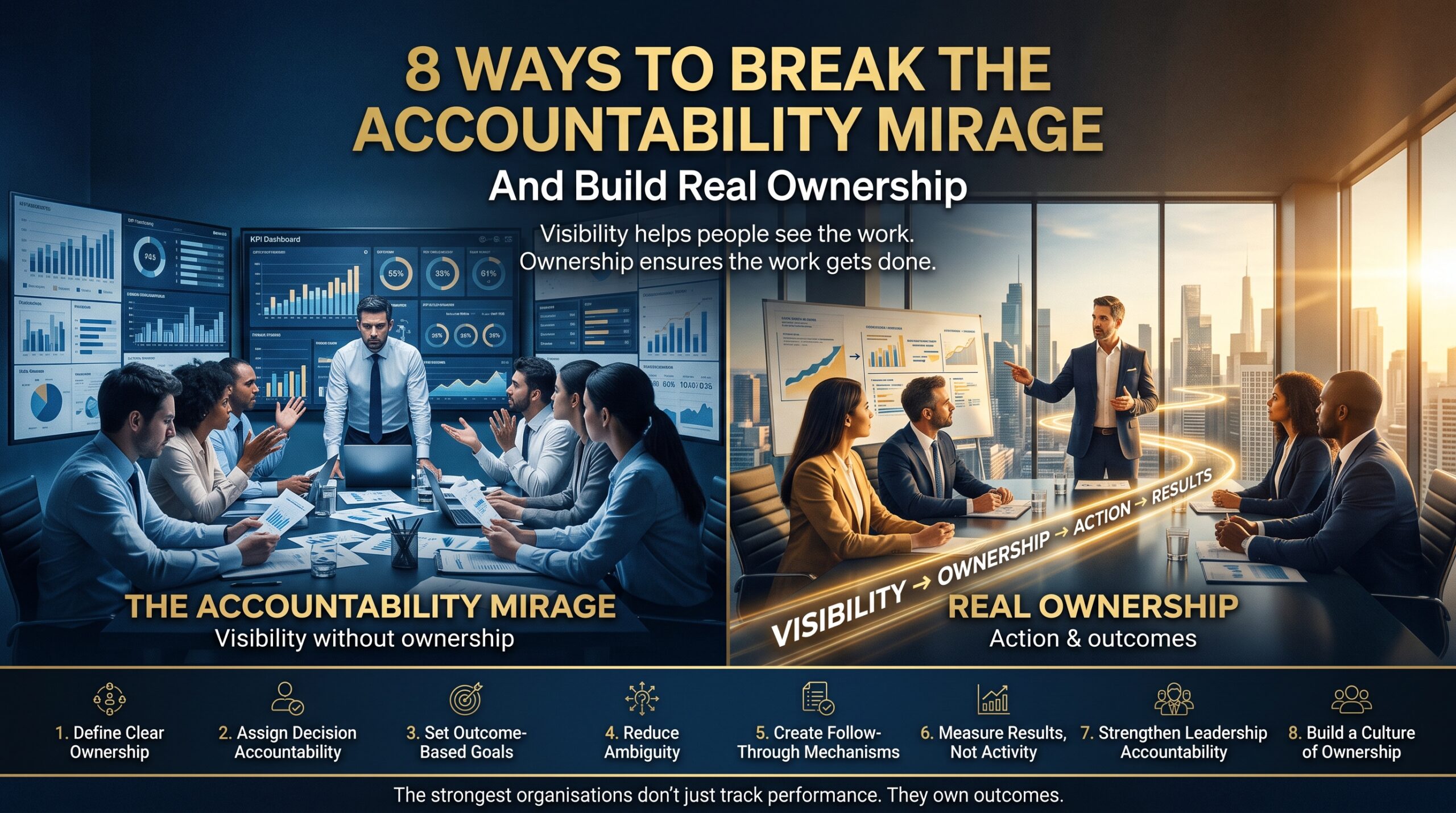
8 Ways to Break the Accountability Mirage and Build Real Ownership
1. Anchor every Sprint to a Sprint Goal
A Sprint Goal gives the team a shared purpose that is bigger than individual tickets. When the team commits to an outcome, ownership shifts from “my tasks” to “our result.” Review it daily at the Daily Scrum so the goal stays alive. It is one of the simplest antidotes to the accountability mirage.
2. Make the Definition of Done real
A clear, honest Definition of Done turns quality into a commitment rather than a hope. If work is not done by that standard, it is not done, no matter how many cards have moved. The Definition of Done is the Scrum Team’s commitment to the Increment.
3. Name a single point of ownership
Shared responsibility is wonderful in spirit and dangerous in practice. For each important piece of work, make sure one person is the visible go-to. They do not have to do all the work, but they are answerable for making sure it gets finished or escalated.
4. Let people choose their work
Self-management is central to Scrum. People feel far more ownership for work they chose than work they were handed. Let the Developers decide how to turn Product Backlog items into an Increment and who picks up what.
5. Use the Daily Scrum to surface blockers, not to report status
If the Daily Scrum becomes a status meeting for a manager, it feeds the accountability mirage. Reframe it as a planning conversation among Developers about progress toward the Sprint Goal and what is in the way. Then follow up on blockers that same day.
6. Close the loop in retrospectives
Every improvement action should have an owner and a date, and the next retrospective should begin by reviewing them. Teams quickly learn whether retrospectives lead to change or just conversation.
7. Build psychological safety
People will not own problems they are afraid to admit. Leaders and Scrum Masters can model openness by sharing their own mistakes, thanking people who raise issues early and treating failures as information. This is the cultural foundation under every other practice on this list.
8. Coach leaders on what visibility is for
Many organisations create the accountability mirage from the top. Show leaders that boards and metrics are tools for inspection and conversation, not for individual performance policing. Ask them to focus on outcomes and the removal of obstacles instead of extra reporting.
The Scrum Master’s Role: Coach, Not Accountability Police
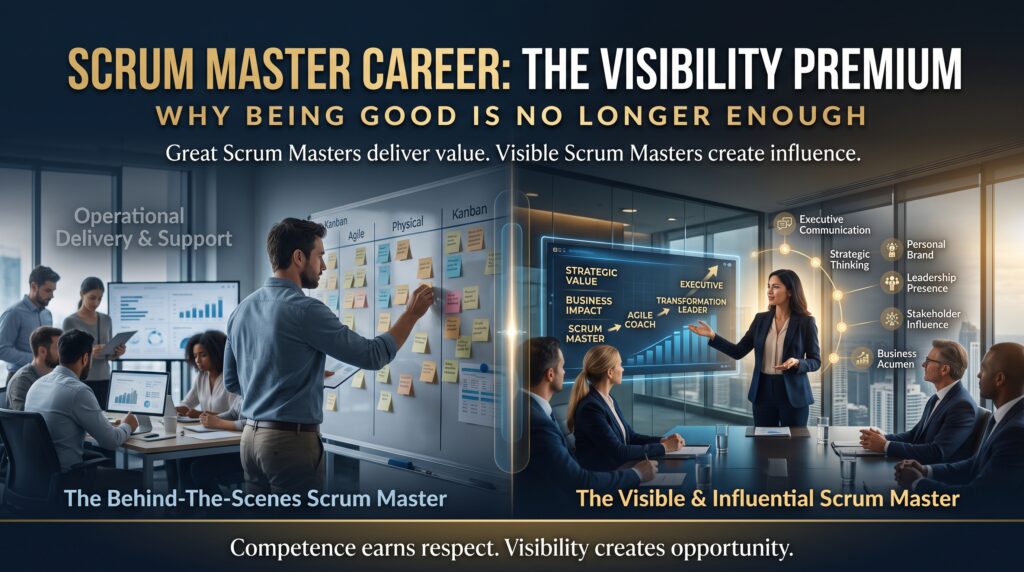
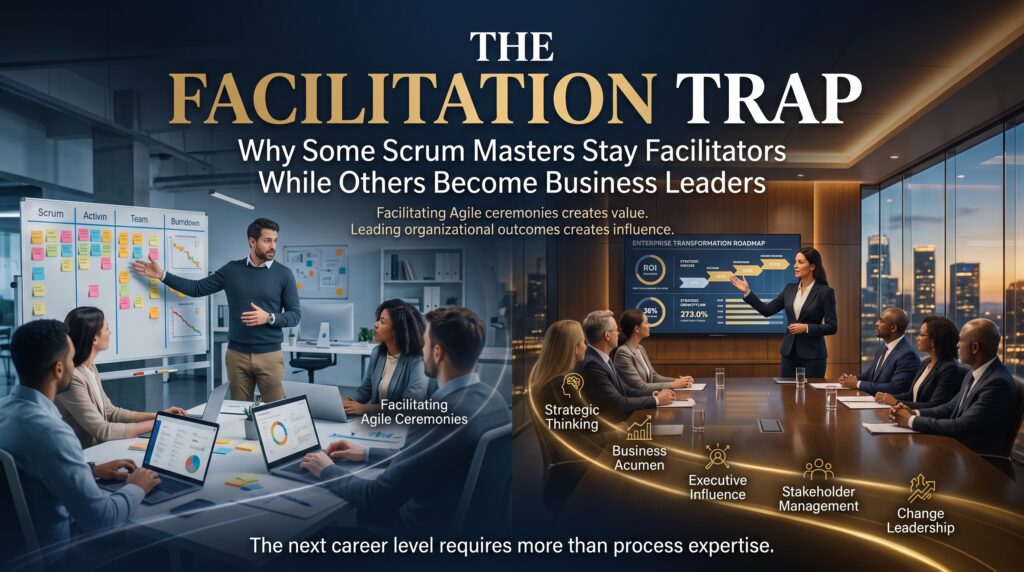
A common mistake is for the Scrum Master to become the person who chases everyone for updates. That just moves the accountability mirage one layer higher. The Scrum Guide positions the Scrum Master as a true leader who serves the team and the wider organisation: coaching, facilitating and helping remove impediments, not enforcing compliance.
Good Scrum Masters ask powerful questions: “Who feels responsible for this outcome?” “What would make it easier to say no?” “What are we afraid will happen if this goes wrong?” These questions turn visible information into personal commitment, which is the whole point.
Scrum Master Certification: Build the Skills to Lead Out of the Accountability Mirage
Experience helps, but structured training gives you proven frameworks, practice facilitating tough conversations and a credential employers recognise. Our Scrum Master certification courses are designed for project managers, business analysts, team leaders, developers and product owners who want to lead Agile teams with confidence. Choose the level that fits your next step:
- Starter: the Agile Scrum Foundation (BCS/EXIN) course introduces Scrum principles, roles, events and artefacts.
- Applied: the Agile Scrum Practitioner (BCS/EXIN) course helps you apply Scrum in real-world situations and tackle practical challenges.
- Leadership focus: the iSQI Scrum Master Pro Certification builds the facilitation, coaching and leadership skills this article has been describing.
Certification bodies such as BCS, EXIN and iSQI are well known internationally. If you have questions about exams, formats or timing, see our FAQs or talk to an advisor.
Scrum Master Certification Across Australian Cities
Agile roles are in demand across the country. Whether you are in Melbourne, Sydney, Brisbane, Adelaide, Perth or Canberra, you can train through live classroom or virtual options and bring what you learn straight back to your team. Explore the full list on our locations page.
- Melbourne: tech, health, education and government projects. See Scrum Master certification in Melbourne.
- Sydney: banking, fintech and large enterprise delivery teams. See Scrum Master certification in Sydney.
- Brisbane: growing digital, infrastructure and public-sector programs. See Scrum Master certification in Brisbane.
- Adelaide: defence, health and advanced manufacturing. See Scrum Master certification in Adelaide.
- Perth: resources, engineering and energy technology. See Scrum Master certification in Perth.
- Canberra: government agencies with strong governance and accountability needs. See Scrum Master certification in Canberra.
Live online delivery is also available for learners in Hobart, Darwin, the Gold Coast, Newcastle, Geelong, Wollongong, Townsville and Cairns.
A Quick Accountability Mirage Audit for Your Team
Try this with your team at the next retrospective:
- Can each person state the Sprint Goal without looking at the board?
- For every open blocker, is there a named person working on it today?
- Does our Definition of Done describe what we truly believe “finished” means?
- Do retrospective actions have owners, and did we complete the last ones?
- Would a team member feel safe saying “I missed this”?
Every “no” shows where the accountability mirage is hiding. Pick one gap and work on it for a single Sprint, then inspect and adapt.
Frequently Asked Questions About the Accountability Mirage
What is the accountability mirage?
It is the false belief that making work visible automatically creates ownership. Teams can have perfect boards and reports while nobody feels personally answerable for outcomes.
Why doesn’t visibility create ownership?
Visibility provides information, but ownership needs commitment, authority and a personal stake. When many people can see a task, each may assume someone else is responsible.
How does Scrum prevent the accountability mirage?
Scrum defines clear accountabilities for Developers, the Product Owner and the Scrum Master, and uses the Sprint Goal, Definition of Done and retrospectives to turn transparency into commitment and improvement.
What can a Scrum Master do about a lack of ownership?
Coach the team, clarify goals and the Definition of Done, build psychological safety, make blockers visible and actionable, and help leaders use metrics for learning instead of blame.
Which Scrum certification should I start with?
Beginners often start with an Agile Scrum Foundation course. Those who already understand the basics may choose Agile Scrum Practitioner or a Scrum Master Pro certification to deepen their facilitation and leadership skills.
Can I study Scrum Master certification online in Australia?
Yes. Live virtual options let you train from anywhere in Australia, including Sydney, Melbourne, Brisbane, Adelaide, Perth, Canberra and regional areas.
Final Thoughts: From Visible to Owned
Making work visible is a wonderful first step, but it is only a first step. Real ownership appears when people understand the goal, choose their commitments, feel safe to be honest and know that someone is answerable for the outcome. The teams that grasp this stop chasing perfect dashboards and start delivering results they are proud of.
If you are ready to lead teams out of the accountability mirage, explore our Scrum Master certification courses, learn more about us, browse our blog or contact our team for personalised advice. We support learners across Melbourne, Sydney, Brisbane, Adelaide, Perth and Canberra, and online.