
Scrum master career growth stalls for a surprising reason, and it is rarely a lack of knowledge. You passed the exam. You run tidy sprint planning sessions, your retrospectives are genuinely useful and your team likes working with you. Then a head of delivery role opens up and the job goes to someone else, maybe someone who has never held a certification at all. It stings, and it leaves a lot of good people wondering what they are missing.
The honest answer is that a certificate proves you understand Scrum. It does not prove you can lead an organisation. Leaders get picked for what they can show: business results, influence and judgement. In this guide, we will unpack why certified Scrum Masters get overlooked, what the top performers do differently and how you can move your own scrum master career forward, whether you work in Melbourne, Sydney, Brisbane, Perth or somewhere else in Australia.
The Scrum Master Career Problem: Certified but Overlooked
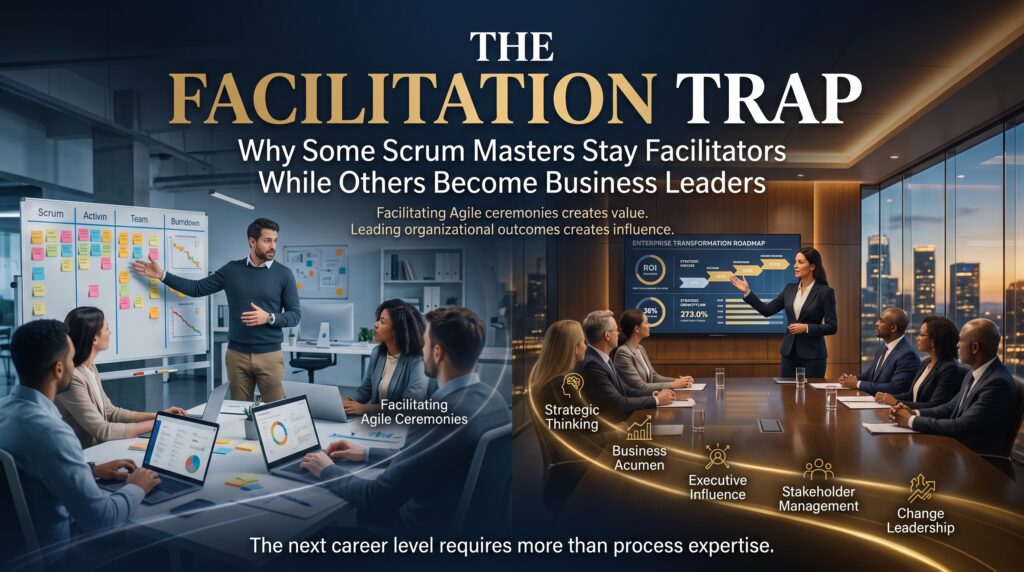
Scrum Master is one of the most misunderstood roles in modern work. The official Scrum Guide describes Scrum Masters as true leaders who serve the team and the wider organisation. In practice, many companies still treat the role as a meeting organiser who keeps the board tidy and books the ceremonies.
That gap between the intent of the role and how it is seen is where a scrum master career often gets stuck. If decision makers see you as a facilitator, they will not picture you running a department. The good news is that perception is something you can change, and the people who do it follow a pattern.
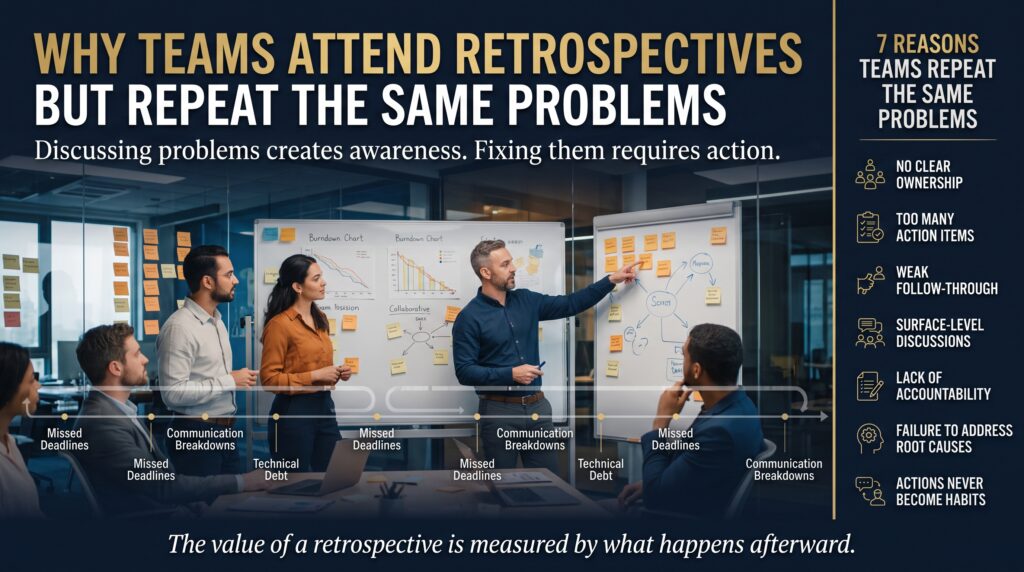
Why a Scrum Master Career Stalls: 7 Common Reasons
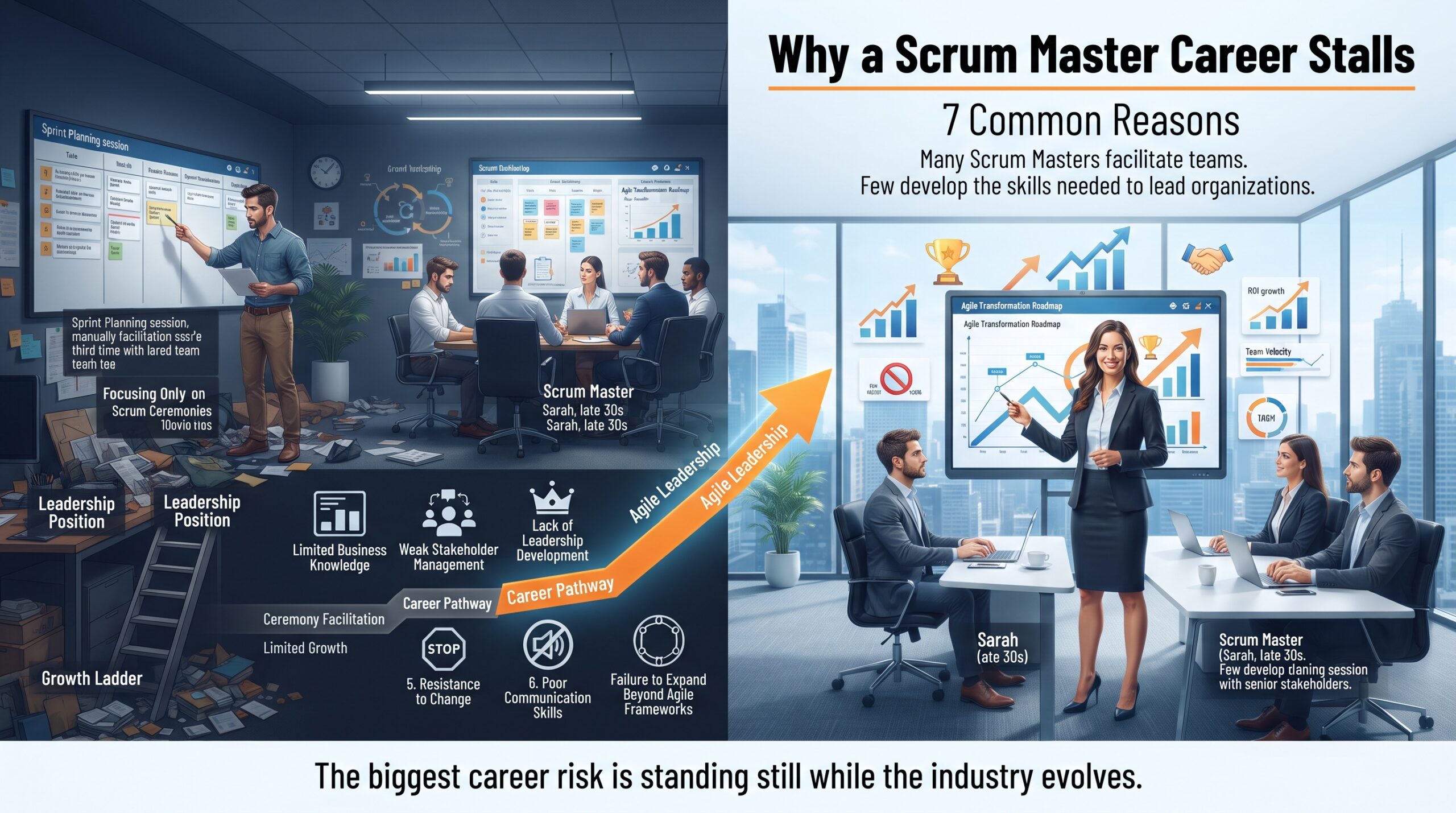
1. They are seen as facilitators, not business leaders
If your visible work is stand-ups, retrospectives and backlog hygiene, that is how people will describe you. Leaders are remembered for the problems they solved and the value they created, not the ceremonies they ran.
2. They cannot show results in business terms
Saying “the team is healthier” does not move a leadership conversation. Saying “we cut delivery time by a third and reduced rework” does. Many Scrum Masters never learn to translate team improvements into numbers that executives care about.
3. Servant leadership gets mistaken for staying in the background
Serving the team does not mean staying quiet. Some Scrum Masters avoid speaking up in senior meetings because they think it is not their place. Leadership teams then see a person without a strong point of view.
4. Their influence stops at the team boundary
Great Scrum Masters improve their team. Promotable ones improve how the whole organisation works. If your impact never leaves one team, it is easy to see you as a team-level resource rather than a leader of change.
5. They have no clear next-step story
Ask ten Scrum Masters where they want to be in three years and many will shrug. Managers cannot sponsor a vague ambition. Naming a specific target, such as agile coach, delivery manager or product leader, makes it far easier for people to back you.
6. Their learning stopped at the first certificate
A foundation certification is a start, not a finish line. Professionals who keep deepening their skills with practitioner-level training, product thinking and leadership development look like people who are heading somewhere.
7. They are invisible to decision makers
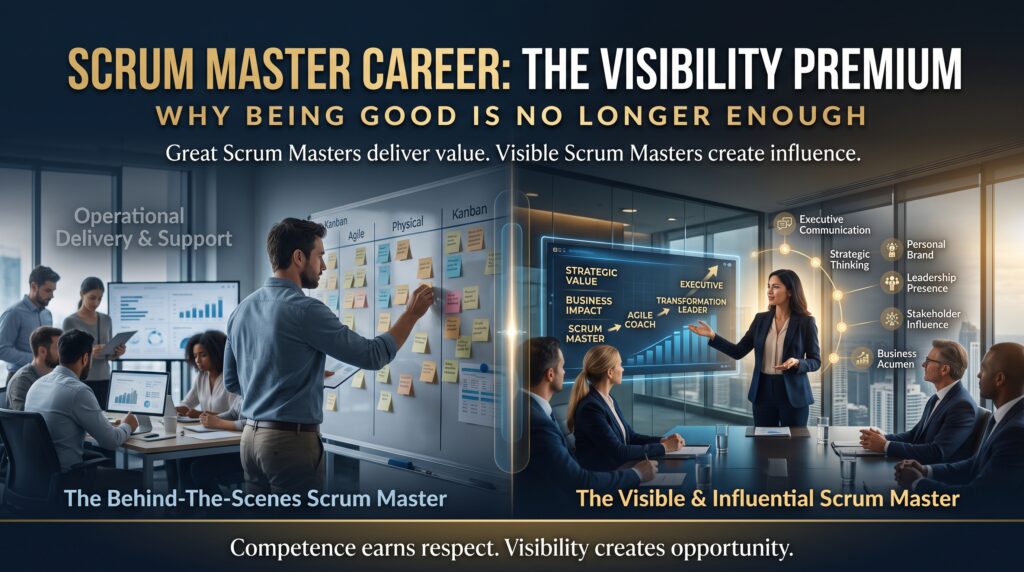
Excellent work that nobody senior sees will not lead to promotion. Scrum Masters often work hard behind the scenes and never share outcomes upward, so leaders simply do not know what they have achieved.
What Top-Performing Scrum Masters Do Differently
The Scrum Masters who break through are not always the most experienced. They simply behave less like process custodians and more like business partners. Here is what sets a rising scrum master career apart.
They measure outcomes, not activity
Top performers track things like cycle time, predictability, quality and customer feedback, then tie those numbers to business goals. They can say, in one sentence, what changed because of their work.
They coach leaders, not just teams
Many agile problems start above the team: unclear priorities, constant interruptions, too many projects at once. Standout Scrum Masters quietly coach managers and sponsors on how to remove those blockers, which builds trust at senior levels.
They learn product and commercial thinking
Understanding customers, revenue and trade-offs turns a Scrum Master into a strategic partner. It also opens the door to roles like product owner, product manager or head of delivery.
They scale their impact
Instead of perfecting a single team, they help several teams, run communities of practice and share what works. Moving from one team to many is the clearest signal that someone is ready for a bigger scope.
They tell a clear story about their value
They keep a simple record of wins: the problem, what they did and what it delivered. When promotion time arrives, they are not scrambling to remember. They present evidence.
They build relationships across the business
They get to know finance, operations, customer service and senior leaders. Those relationships make it easier to solve cross-team problems and put them on the radar when new roles appear.
They keep their credentials and skills moving
They treat certification as a ladder for their scrum master career. Foundation, then practitioner, then advanced or specialist options. If you want a structured path, see the courses page for the current options.
Scrum Master Mindset vs Agile Leader Mindset
The easiest way to see the difference is to compare how a stalled scrum master career and a rising one look from day to day.
| Stuck Scrum Master | Rising Agile Leader | |
| Focus | Ceremonies and team process | Business outcomes and customer value |
| Reports on | Velocity and activity | Cycle time, quality and results that matter |
| Audience | The team | Team, senior stakeholders and the wider organisation |
| Learning | Stops after the exam | Keeps growing through practice and advanced training |
| Visibility | Works behind the scenes | Shares outcomes and lessons openly |
Scrum Master Career Path: Where You Can Go Next
One of the best things about a scrum master career is how many directions it opens up. You are not locked into a single route. Here are common next steps.
| Next role | What it involves | What to build |
| Senior Scrum Master | Supports multiple teams and mentors others | Coaching, conflict resolution, metrics |
| Agile Coach | Guides teams and leaders through ways of working | Facilitation, change management, credibility with executives |
| Product Owner / Product Manager | Owns the vision, backlog and value delivered | Customer insight, prioritisation, commercial skills |
| Delivery Manager | Leads delivery across teams and projects | Planning, risk, stakeholder and budget management |
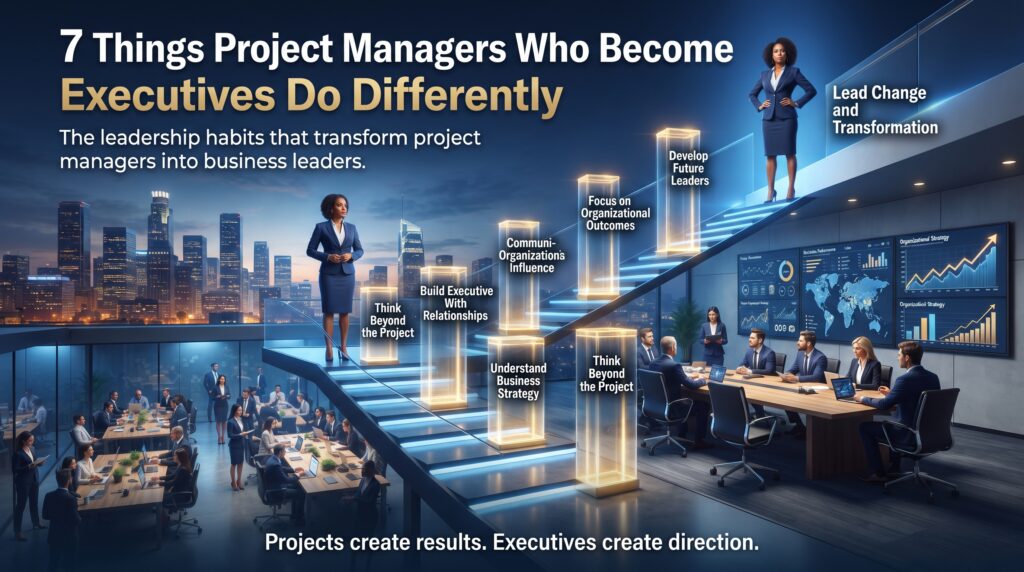
| Head of Delivery / Transformation Lead | Shapes how the organisation delivers at scale | Strategy, leadership, influence and finance |
Certifications That Strengthen a Scrum Master Career
Certifications will not do the work for you, but the right ones show commitment to your scrum master career and give you shared language with hiring managers. To understand the framework itself, read the Scrum Guide and the Agile Manifesto, and for background see Wikipedia’s Scrum overview).
At Scrum Master Certification, the main pathways are:
- Agile Scrum Foundation (BCS/EXIN) to build a solid understanding of Scrum roles, events and artefacts
- Agile Scrum Practitioner (BCS/EXIN) to prove you can apply Scrum in real situations
- iSQI Scrum Master Pro Certification for deeper, more advanced Scrum Master capability
You can compare everything on the Scrum Master Certification courses page. To see which skills employers are asking for, check labour market data from Jobs and Skills Australia and role descriptions on SEEK Career Advice.
Scrum Master Career Opportunities by City
A scrum master career can take shape in technology, finance, healthcare, construction, government, education and professional services. Training is available across Australia in classrooms, live virtual sessions and in-house formats. See every option on the locations page.
Melbourne
Melbourne has a deep Agile community and a wide mix of technology, finance, healthcare and government employers. Explore Scrum Master Certification in Melbourne.
Sydney
Sydney’s banks, consultancies and large enterprise teams regularly hire delivery leads and agile coaches. See Scrum Master training in Sydney.
Brisbane
Brisbane’s growing technology and infrastructure scene is creating more agile delivery roles. Visit the Brisbane page to learn more.
Perth
Perth’s resources and energy businesses are increasingly adopting agile ways of working. Check the Perth page for study options.
Adelaide and Canberra
Adelaide offers growing opportunities in defence and advanced industries, and Canberra has steady agile adoption across government. See the Adelaide and Canberra pages. Learners in Hobart, Darwin and the Gold Coast can also train online.
Scrum Master Career Mistakes to Avoid
These mistakes quietly hold back a scrum master career, usually without the person noticing:
- Defining yourself by ceremonies. Your value is the outcomes those ceremonies create.
- Waiting for permission to lead. Offer a view in senior meetings and back it with evidence.
- Skipping the numbers. If you cannot measure improvement, you cannot prove it.
- Staying inside one team forever. Look for chances to help others and share what works.
- Treating certification as the finish line. Keep learning after the first exam.
- Never telling anyone what you achieved. Share results regularly, upwards and across.
A 90-Day Plan to Move Your Scrum Master Career Forward
| Days | Focus | What to do |
| 1 to 30 | Clarity and proof | Choose your target role, list your top three results with numbers and ask a senior leader for feedback on how you are seen. |
| 31 to 60 | Impact beyond the team | Start one cross-team improvement, begin a community of practice and coach one manager on removing a recurring blocker. |
| 61 to 90 | Visibility and learning | Present results to leadership, book a practitioner-level or advanced course and agree a development plan with your manager. |
Frequently Asked Questions About a Scrum Master Career
Is Scrum Master a good career in Australia?
For many people, yes. Agile ways of working are used across industries, and the role can lead to coaching, product, delivery and leadership positions. The best outcomes in a scrum master career go to people who focus on business results rather than only on process.
What is the next step after Scrum Master?
Common options include senior Scrum Master, agile coach, product owner, delivery manager and head of delivery. The right choice depends on whether you enjoy coaching people, shaping products or leading delivery at scale.
Why do certified Scrum Masters get passed over for promotion?
Usually because they are seen as facilitators rather than leaders, cannot show results in business terms or have limited visibility beyond their team. Certification proves knowledge, but promotion depends on demonstrated impact and influence.
Is Scrum Master certification enough to get a leadership role?
It is a strong foundation, but rarely enough on its own. Pair it with measurable results, relationships across the business and ongoing learning to stand out.
Which Scrum Master course should I start with?
Beginners often start with a foundation course, then move to practitioner level once they are applying Scrum at work. If you already have experience, an advanced option such as the iSQI Scrum Master Pro certification may suit you better.
Final Thoughts: Turn Your Certificate Into Leadership Credibility
A scrum master career does not stall because of the title. Being passed over feels personal, but it is usually a signal about perception and evidence rather than ability. Scrum Masters who rise shift from running the process to improving the business, and they make sure the right people know about it. You can start doing exactly that this week.
Remember that every strong scrum master career is built the same way: one visible result at a time.
Ready to build your skills? Explore our Scrum Master Certification courses, browse all locations, read the FAQs, visit the blog or learn more about us. To talk through the right pathway, contact our team or call 1300 649 299.